Visiting the Tulum Ruins with Kids: A Family Guide
Is Tulum good for kids? An honest, safety-first guide covering the best age to visit, stroller vs. carrier, heat and cliff safety, and the cenote that pairs best with a family visit.
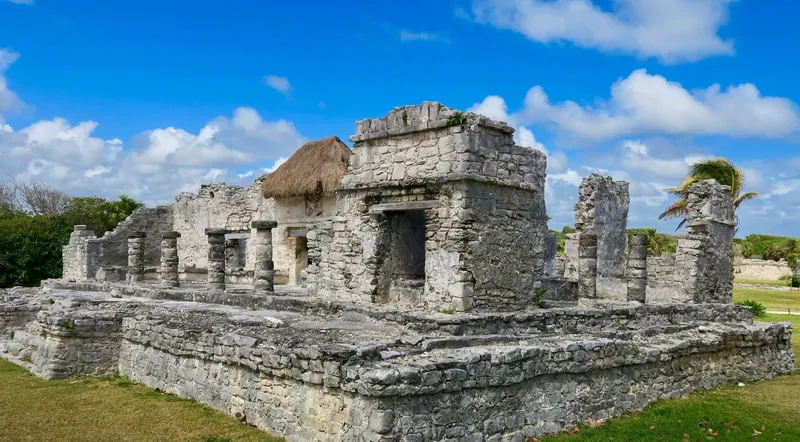
Here’s the honest verdict up front: Tulum is one of the more manageable Maya ruins for families in this region — compact, flat, and quick compared to sprawling sites like Cobá. The challenge isn’t the walking. It’s the sun.
There’s almost no shade anywhere inside the walls. That single fact should shape most of your planning, more than your child’s age, more than the stroller decision, more than anything else on this page. If you’d rather have a guide set a short, early pace, the guided walk below runs about 1 hour 15 minutes and offers various start times; check the age policy for your youngest child before you book:
Is Tulum Good for Families?
Yes, with one asterisk that deserves to be taken seriously.
The advantages are real: the site is small enough to see in well under two hours even at a child’s pace, there’s no climbing required (a plus for safety, though older kids sometimes find it disappointing after climbable sites), and the resident iguanas are a reliable hit with almost every age. There’s a swim reward available nearby too.
The honest downside is heat exposure. Parent experiences diverge here: some families report a wonderful morning with kids splashing in the waves afterwards; others rank it their least favourite stop of the trip because a toddler wilted in the sun within twenty minutes. The difference between those two outcomes usually comes down to one decision, which is what time you arrive.
What’s the Best Age to Visit?
There’s a real consensus among family travellers on this, and it helps to know it before you plan.
| Age band | What to expect | Key tips |
|---|---|---|
| Babies (0–12 months) | Manageable in a carrier; heat is the real limiter; they won’t remember it | Carrier, not stroller. Arrive at 8 AM. Full sun cover. Keep it brief. |
| Toddlers (1–3) | The hardest age — heat-sensitive, wants down, prone to meltdowns | Keep it very short. Frequent shade and water breaks. Promise the swim after. |
| Preschool (4–7) | Iguanas and running around are the draw, not the history | Turn it into an iguana hunt. Most tours accept this age. |
| Kids and tweens (8–12) | The sweet spot — they engage with the story of the place | A good guide adds real value here. Pair with a cenote or Akumal. |
| Teens (13+) | Handle it easily; may need extra engagement | Tie it to photography or an adventure add-on, like the newly reopened Cobá climb. |
The consensus, stated plainly: the ruins “engage more reliably from age seven or eight.” Below that, the visit is mostly about the setting, the iguanas and the swim afterwards. That’s a perfectly good reason to go; it just isn’t a history lesson.
Other Experiences You Might Enjoy
A family base on this coast has a lot more within reach than one set of ruins. Akumal and its sea turtles, the climbable jungle pyramid at Cobá, the freshwater cenotes along the Cobá road, the Muyil ruins and the lazy-river float through the Sian Ka’an Biosphere Reserve, and the long day inland to Chichén Itzá and colonial Valladolid are all day trips from Tulum or the Riviera Maya. Current availability and pricing for these and other family-friendly experiences along this stretch of coast are below.
Stroller or Baby Carrier?
Parents disagree on this one, so here are both sides.
The case against strollers: the terrain includes uneven dirt, gravel and sand, and several parents describe a stroller as “totally useless” on the path. One parent who visited with a three-month-old put it directly: they ended up carrying the baby for most of the visit.
The case for strollers: other families report the main paths are workable with a lightweight stroller, particularly since a ramp now runs alongside the entrance stairs. The terrain is described elsewhere as “relatively wheelchair- and stroller-friendly by ruin standards, with broad paths and fewer steep climbs than many other sites” — though you’ll likely need to park the stroller for a few short stretches.
Our recommendation: bring a soft or hiking-style carrier as your primary plan for anyone under two, especially if naps are a factor. A lightweight umbrella stroller can work as a secondary option on the main paths if your child is more comfortable in it, but be ready to fold it up for short stretches.
The walk in
Since the Parque del Jaguar reorganization, there’s a walk between parking and the ruins entrance, roughly a kilometre, with an electric shuttle covering part of it (our ticketing guide has the current fares and how the shuttle works). Parents describe this stretch as warm even early in the morning, so factor it into your timing. Children under 13 pay nothing for the archaeological-zone portion of the entrance fee, which the same guide breaks down charge by charge.
Nap timing and the 8 AM strategy
The advice here is universal and worth following exactly: arrive right at the 8:00 AM opening. It’s the coolest part of the day, and the best window for a baby who might nap through part of the visit in a carrier. See our best-time-to-visit guide for the full case on why this timing matters for everyone, not just families.
Bathrooms and changing facilities
Restrooms exist only at the entrance and parking area. There are none inside the archaeological zone itself, and no re-entry once you leave, so make a bathroom stop before heading in. We couldn’t confirm that dedicated baby-changing facilities exist, so bring a portable changing mat as a backup rather than assuming one will be available.
Keeping Kids Safe: Heat, Sun, and Cliffs
Heat and sun
Children regulate temperature less efficiently than adults, which makes this more than a comfort issue. Watch for heat exhaustion — heavy sweating with cool, pale skin, a fast weak pulse, tiredness, dizziness, nausea — and treat heatstroke as an emergency: hot, dry skin where sweating has stopped, confusion, a racing pulse, intense thirst. If you see the second set of symptoms, get out of the sun and seek help immediately.
Practical mitigation: frequent water breaks, light loose clothing, wide-brim hats, sunscreen reapplied often, and — the single biggest lever — avoiding the site during the exposed midday hours. For infants, one check is useful to know: concentrated, dark urine in a wet diaper is an early sign of dehydration.
Cliff edges
El Castillo and the Temple of the Wind God sit at the edge of a 12-metre limestone cliff. The drop-offs are roped off, but not fully railed or barriered. This is a real hazard, not a theoretical one: keep young or excitable children close and hold hands near any viewpoint. Active supervision is the only real mitigation here, so don’t rely on the ropes alone.
The iguanas
Not aggressive, and one of the most reliable delights of a Tulum visit for kids of every age — you’ll find them basking on the walls throughout the site. They won’t approach or bite, but instruct kids not to touch or feed them, both for the animals’ protection and to avoid a surprised nip if a hand gets too close to food.
Tours and Getting There With Kids
Minimum ages vary — check before you book
Ruins-only tours are broadly open to young children, with minimum ages commonly set around 3 to 5 depending on the operator. It’s the add-ons that raise the floor: Akumal turtle-snorkelling combos commonly require ages 6 to 8 and basic swimming comfort, even with mandatory life jackets, and adventure add-ons like ATVs or cave diving typically start at 8 and up. Always check the specific listing before booking rather than assuming. The packaged Tulum, cenote and Akumal turtle swim day from Cancún is the one to read the age line on first: it’s rated 4.5 from 376 reviews, from $84 plus a $40 fee per adult paid in cash on the day, and it’s a long day for a small child in any case.
Private vs. small-group for families
For toddlers and babies, a private tour is worth the price difference: you control the pace, the bathroom stops, and whether to cut the visit short if a nap window collapses. The private Tulum ruins guide starts at $82 per group, but it rates 4.5 from only 13 reviews, so read what’s there before you commit. For school-age kids and teens, a small-group tour with hotel pickup works perfectly well and beats juggling colectivos, parking and tickets on your own. The small-group ruins, two cenotes and Mexican lunch day includes hotel transfers, life vests and a lunch stop, rated 5.0 from 35 reviews, from $165 plus a $50 conservation fee per person paid in cash on the day; confirm the minimum age on the listing first, since it isn’t published in the tour details. See our tour formats guide for the full comparison.
Transport and car seats
Mexico has child-restraint requirements on paper, but enforcement in tourist areas is inconsistent, and colectivos and taxis rarely offer seatbelts, let alone car seats. If a car seat matters to your family, your most reliable option is a pre-booked private transfer or tour with a seat requested in advance — confirm this explicitly when booking rather than assuming it’s included. A rental car with your own or a rented seat is the next-best option. A colectivo is the cheapest, but it’s impractical with a car seat and a full bag of gear.
Pair It With a Swim
Cenote Zacil-Ha is the standout family pick among the cenotes near Tulum. It’s shallow in sections, with stair access and a rope across the water for an easy, controlled entry, a real contrast to jump-only cenotes that suit confident adult swimmers better. It also has two smaller pools specifically for little ones, a gentle zipline for older kids, on-site bathrooms and changing rooms, and life jackets available in kid sizes, which are required for children. See our full cenotes guide for more options.
Two points on freshwater specifically. Cenote water is less buoyant than seawater, so even confident young swimmers tire faster, which is another reason the life jacket rule matters and isn’t a formality. And only reef-safe, biodegradable sunscreen is permitted, the same rule that applies inside the ruins themselves.
If you’re considering Akumal or Cobá as a second stop: Akumal’s turtle-snorkel tours typically carry a minimum age around 6 to 8, so check before booking if you have younger children — see our Akumal guide. And while Cobá’s Nohoch Mul pyramid climb reopened in December 2025, it’s steep with narrow steps: a great adventure for confident older kids and teens, but not appropriate for toddlers or young children. Our Tulum + Cobá guide has the full picture.
What to Pack
Reef-safe sunscreen, applied before you arrive and reapplied through the day; wide-brim hats and sunglasses sized for kids; refillable water bottles — single-use plastic isn’t permitted inside, and you’ll want more water per child than you’d think; snacks, since nothing is sold inside the zone; lightweight sun-protective clothing; a baby carrier if you have little ones; a portable changing mat; basic first-aid essentials; swimsuits worn under clothes plus a towel for the swim stop; and cash in pesos for fees, parking and the shuttle.
A Realistic Time Budget
Plan on about 1 to 1.5 hours inside the ruins with young kids, which is shorter than the standard adult visit, plus time for the shuttle, the walk in, tickets and an inevitable bathroom stop. All told, budget roughly 2 to 3 hours door-to-door for the ruins alone. If you’re pairing the visit with a cenote or Akumal, expect a full day of 6 to 9 hours.
Go in expecting a slow loop with frequent breaks and not a brisk tour, and don’t be afraid to cut it short if the heat or a meltdown wins. You can always finish the story later, by the pool.
Frequently Asked Questions
Is Tulum good for families with kids? Yes, with the caveat that heat management matters more than anything else. It’s compact and manageable compared to other regional sites, and the iguanas are a reliable hit.
What’s the best age to visit the Tulum ruins? Kids engage most with the history from around age seven or eight. Younger children can still enjoy the setting, the iguanas, and a swim afterwards, just not the historical content itself.
Can you bring a stroller, or should you use a carrier? Both are used successfully by different families. A carrier is the more reliable choice for children under two, especially given uneven surfaces and the possibility of napping through part of the visit.
Are the Tulum ruins safe for toddlers near the cliff edges? The drop-offs are roped but not fully barriered, so active supervision near any viewpoint is essential — don’t rely on the ropes alone.
Is there any shade at the Tulum ruins? Very little. This is the single most important factor to plan around, more than age or terrain.
Are there bathrooms and changing facilities? Restrooms exist only at the entrance and parking area, none inside the zone. Baby-changing facilities aren’t confirmed, so bring your own mat as a backup.
What’s the minimum age for Tulum ruins tours? Ruins-only tours commonly accept children from age 3 to 5, depending on the operator. Add-ons like Akumal turtle snorkelling typically require ages 6 to 8.
Which cenote is best for young kids near Tulum? Cenote Zacil-Ha, thanks to its shallow sections, stair and rope entry, dedicated kids’ pools, and available kid-sized life jackets.
How long should families budget for a visit? About 1 to 1.5 hours inside with young kids, 2 to 3 hours door-to-door for the ruins alone, or a full day if pairing with a cenote or Akumal.
Plan Your Family Visit
The formula that works: arrive early, keep it short, manage the sun aggressively, and reward the effort with a swim. Check the early start times for the guided walk in the calendar above, or compare every guided option and combo before you choose.
Browse family-friendly Tulum ruins tours →
Related: The complete Tulum ruins guide · Tulum ruins and cenote tours · Private vs. small-group tour formats · Best time to visit
Safety guidance and logistics verified August 2026. Facility availability and site rules change — confirm current conditions before your visit, particularly around beach access and any tour age requirements. Ratings and review counts re-checked live on 19 September 2026 and will drift as new guests review.
Walk Through 800 Years of Maya History
Join guests who rated this guided walking tour 4.9/5. A certified local guide, skip-the-confusion entry, and beach access afterward — all included. Free cancellation.
Check Availability & Book