Tulum Ruins + Cenote Tours: Which Cenotes Are Actually Worth It
Which cenote should you pair with the Tulum ruins? A full comparison of the cenotes near Tulum — current fees, crowd levels, and which ones tour buses actually use.
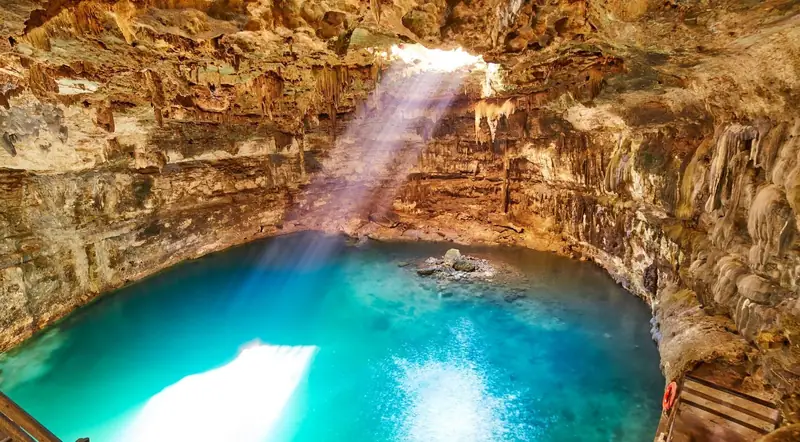
Pairing the ruins with a cenote is the single most popular way to see Tulum, and for good reason. The archaeological zone is a shadeless clifftop that turns punishing by 11am; a cenote is cool freshwater in deep shade. The sequencing almost writes itself.
What most tour listings won’t tell you is that the cenote you get matters enormously — and the ones large operators default to aren’t always the ones worth your morning. This is the full comparison: the cenotes near Tulum, which ones the buses use, and which reward going independently.
Cenote entrance fees change frequently and vary between sources — every figure below is a checked range, not a promise. Confirm at the gate.
Why the Ruins Come First
Every well-run combo tour follows the same order, and it isn’t arbitrary. Tours arrive at the archaeological zone for the 08:00 opening, spend 90 minutes to two hours inside, then move to a cenote around midday. The ruins are exposed limestone with almost no shade; by late morning the heat has built. The cenote is the reward, and it happens to be at its most welcome exactly when the ruins become unpleasant. If you’re offered an itinerary that does the cenote first, ask why — it usually means a late start.
Typical formats:
- Half-day (4–5 hours) — ruins plus one nearby cenote
- Full-day (8–10+ hours) — ruins, a cenote, plus Cobá, Akumal snorkelling, or a beach stop
- Chichén Itzá combos (11–12 hours) — a very long day, usually with Ik Kil or Suytun attached
A half day genuinely fits both, provided the cenote is close — Calavera, Cristal, Escondido, Gran Cenote and Car Wash are all under fifteen minutes from the ruins.
Usually included: transport, a guided ruins tour, snorkel gear, life jackets, and lunch on full-day trips. Frequently excluded: the ruins admission itself, cenote entrance fees, lockers, towels, and tips. Many operators now itemise the foreigner entry fee separately at check-in — see our tickets and fees guide for the current 265-peso breakdown — and Cobá combos often add ejido and conservation fees on the day. Read the inclusions line carefully; a tour that looks cheaper often just moves fees to the gate.
Other Experiences You Might Enjoy
If a cenote day is part of your plan, a few other Tulum-area experiences pair naturally with it: sea turtle snorkeling at Akumal, a full day trip to Cobá for its climbable jungle pyramid, or a Chichén Itzá combo out of Cancún if you’re chasing the Suytun light-beam photo. Current availability and pricing for these and other Tulum-area tours are below.
The Cenotes: Full Comparison
| Cenote | From the ruins | Type | Fee (MXN) | Crowds | Best for |
|---|---|---|---|---|---|
| Gran Cenote | 10 min | Semi-open cavern | ~300–500 | Very high | Convenient classic |
| Dos Ojos | 25 min | Cave system | ~350–400 basic | High | Snorkellers, divers |
| Calavera | 10 min | Semi-open jug | ~250–300 | Medium | Cliff-jumping |
| Casa Cenote | 15 min | Open brackish channel | ~500 | Medium | Divers, wildlife |
| Cristal + Escondido | 5 min | Two open-air | ~200–300 combo | Medium | Value |
| Car Wash | 15 min | Open + cave | ~300 | Low–med | Quieter swim |
| Cobá cave cenotes | 40 min | Enclosed caves | ~55–100 each | Low | Cobá combos |
| Ik Kil | At Chichén Itzá | Deep open circular | ~200–250 | Very high | Chichén combos |
| Suytun | Near Valladolid | Enclosed cavern | ~250 | Very high | The light-beam photo |
All fees are checked ranges for foreign visitors as of August 2026. Most cenotes are cash-only with no ATM on site.
Cenote by Cenote
The table above is the shortlist. Here is what each of those cenotes is actually like, grouped by how far you have to go for it.
Closest to the ruins
Gran Cenote — Four kilometres west on the Cobá road. Two sinkholes joined by a swimmable cavern full of bats, with freshwater turtles in the shallows. Genuinely beautiful and genuinely overrun — it hits capacity and turns people away by mid-morning. Go at opening or don’t go.
Cenote Calavera — Three kilometres out, and the most fun of the close cluster. A collapsed roof leaves one large hole and two small “eye” holes you can jump through, which is where the “Temple of Doom” nickname comes from. Small enough that it feels crowded quickly; life jacket rental is extra.
Cenote Cristal and Cenote Escondido — Five minutes south on Highway 307, facing each other across the road. A combined ticket covers both, and single-cenote entry is sometimes refused. Cristal has a jumping platform; Escondido is larger and quieter. Buses tend to arrive around noon, so mornings are calm — the best value-to-crowd ratio near Tulum.
Cenote Car Wash (Aktun Ha) — Roadside on the Cobá road, an open pond about fifty metres across sitting above a serious cave system. Snorkelling visibility is seasonal — a surface algae layer typically clears mid-October to February, which is when it looks its best.
North of Tulum
Cenote Dos Ojos — Twenty-two kilometres north, inside a managed park on ejido land. Two large sinkholes in an extensive cave system with exceptional clarity, and the region’s premier cavern snorkel. The basic ticket covers swimming; a package adds a guided snorkel and Bat Cave access. Note the ticket booth sits about two kilometres from the water — bikes and shuttles bridge the gap.
Casa Cenote (Manatí) — Fifteen minutes north near Tankah, and unlike anything else on this list: an open, mangrove-lined channel where fresh water meets salt, producing a mix of river and marine life. Excellent beginner diving and a superb snorkel. It also has a resident crocodile — a small, habituated animal locals call Pancho, generally indifferent to swimmers and a draw rather than a hazard. Give it distance and don’t attempt close-range photographs.
The Cenotes Further Afield
The cenotes above are within reach of the ruins on the same morning. These two clusters are a different kind of trip — a longer drive, and usually a tour rather than a taxi.
Cobá cave cenotes
Choo-Ha, Tamcach-Ha and Multum-Ha sit within ten minutes of the Cobá ruins, about forty minutes from Tulum. All three are enclosed underground caverns reached by stairs, with cold, glass-clear water and heavy stalactite formations. They’re ejido-managed, cheap, and dramatically less crowded than anything closer to the coast. If your itinerary includes Cobá, these are the obvious cenote pairing, and a combined ticket usually covers all three.
Chichén Itzá combos
Ik Kil — Three kilometres from Chichén Itzá, and one of the most photographed cenotes in Mexico: a forty-eight-metre-deep circular shaft with vines trailing to the water, reached by about ninety steps. Also relentlessly crowded, with a two-hour visit cap and a strict sunscreen ban.
Suytun — Near Valladolid, famous for the stone platform lit by a shaft of light through the cavern roof around midday. Be clear-eyed about it: this is a photo queue, not a swim. The platform can flood in the rainy season, and waits for the shot are long.
Which Cenotes the Buses Use
Worth knowing before you book, because it determines what you’ll actually experience.
Large-group staples: Gran Cenote, Dos Ojos, Cristal and Escondido, and Ik Kil plus Suytun on Chichén days. Better independently: Casa Cenote, Calavera at opening, Car Wash, and the Cobá cave cenotes.
Our verdict:
- Gran Cenote and Dos Ojos — worth it if you arrive at opening. Otherwise you’re paying premium prices for a queue.
- Ik Kil and Suytun — worth it for the photograph, not the swim. Book them knowing that.
- Cristal, Escondido and the Cobá cenotes — the best combination of price, quality and breathing room.
- Casa Cenote — the most distinctive water on this list, and the one to choose if you only visit one.
New Rules Worth Knowing
There’s no national sunscreen ban, but most cenotes prohibit conventional sunscreen, and many now prohibit all sunscreen — including products labelled reef-safe or biodegradable, since the freshwater aquifer connects underground to the Mesoamerican reef. A mandatory pre-swim shower is standard and actively enforced. The practical approach: apply reef-safe sunscreen about twenty minutes before you arrive so it absorbs, or skip it entirely and wear a UV rash guard.
In June 2025, Quintana Roo’s health regulator COFEPRIS advised against swimming in several cenotes after testing found elevated bacteria levels, with reporting at the time naming Cenote Cristal, Cenote Calavera and Casa Cenote among them. Readings fluctuate seasonally and this may well have lapsed by the time you travel, but it’s worth checking the current status before you go, particularly with children or anyone immunocompromised. Managed cenotes with filtration and enforced shower rules are generally the lower-risk option.
What to Bring, and Staying Safe
Bring: swimwear worn under your clothes, a quick-dry towel, water shoes for slippery limestone stairs, a waterproof phone case, and cash in pesos — most cenotes take cash only and have no ATM. Water temperature holds at roughly 24–25°C year-round; no wetsuit needed for swimming or snorkelling.
Life jackets are mandatory at many cenotes and rented at others. Open and cavern cenotes are safe for competent swimmers and snorkellers, but one distinction matters more than any other: cavern snorkelling and cave diving are not the same activity. Cavern means daylight zone. Cave means beyond it, into the system, and requires full cave certification — among the most technically demanding diving there is. Never follow a guideline into dark passage without that qualification.
Ik Kil, Suytun and the Cobá cenotes all involve substantial stairs; Dos Ojos has a two-kilometre access road from the ticket booth. Casa Cenote is the most level option of the group.
Why Cenotes Beat the Beach in Sargassum Season
Cenotes are inland freshwater — sargassum never reaches them. The seaweed season runs roughly April to October, worst in July and August, and during those months the coast can be unswimmable while the cenotes are exactly as they always are. For anyone travelling in that window, this alone justifies the combo tour. See our best time to visit guide for the full seasonal picture.
What Cenotes Meant to the Maya
The word comes from the Yucatec Maya ts’onot, meaning a water-filled sinkhole or well. The Yucatán is porous limestone with virtually no surface rivers — rain filters straight down into a vast interconnected aquifer, and cenotes are the windows into it. For the ancient Maya they were the primary fresh water source and sacred sites, understood as openings to the underworld and used for offerings. The peninsula’s semicircular “Ring of Cenotes” traces the buried Chicxulub impact crater.
One point of accuracy worth having right: Sistema Sac Actún is no longer the world’s longest underwater cave. A 2023 survey confirmed Sistema Ox Bel Ha as longer, at roughly 542 kilometres against Sac Actún’s 376. Sac Actún remains extraordinary regardless — linking more than 220 cenotes and yielding some of the oldest human remains found in the Americas.
Booking
If you’re choosing between listings, three questions settle it: which cenote (by name — vague “jungle cenote” wording usually means whichever is convenient that day), what time it departs, and whether entrance fees are included or payable at the gate.
Ready to book? Check availability for our featured Tulum ruins guided walking tour above, or see the complete Tulum ruins tours guide for every tour type, including cenote combos.
Walk Through 800 Years of Maya History
Join guests who rated this guided walking tour 4.9/5. A certified local guide, skip-the-confusion entry, and beach access afterward — all included. Free cancellation.
Check Availability & Book