Private vs Small-Group vs Self-Guided Tulum Tours: How to Choose
Private, small-group, large-bus, or self-guided — which Tulum tour format is actually right for you? An honest, decision-focused comparison with the math on when private pays off.
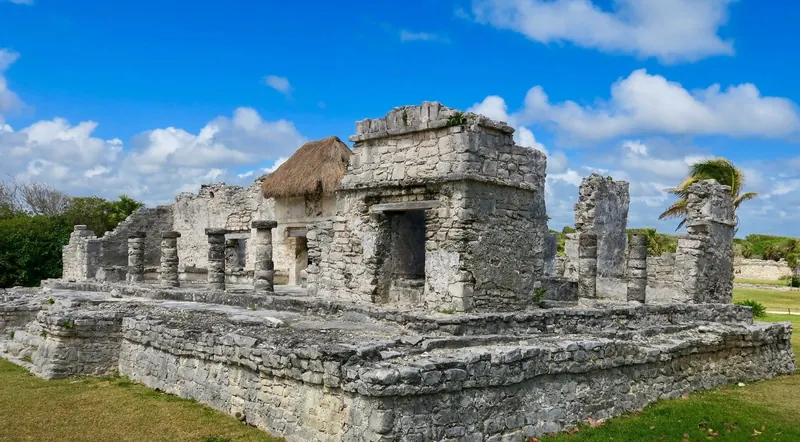
Most Tulum guides tell you where to go and when. This one is about a different question: once you know you’re visiting, which kind of tour actually fits how you travel?
There are four real formats — large-group bus, small-group, private, and self-guided — plus a hybrid worth knowing about: arranging your own transport and hiring an accredited guide at the gate. Each has a genuine place. Here’s how to pick, honestly.
This guide covers format, not logistics. For getting there, see our departure guides for Cancún, Playa del Carmen, and Cozumel cruise stops.
The Four Formats at a Glance
| Large-bus | Small-group | Private | Self-guided | |
|---|---|---|---|---|
| Group size | Up to ~50 on the coach, listings capped as high as 99 | ~10–12, sometimes up to 16 | Your party only | Just you |
| Cost tier | Budget | Mid-range | Highest overall, but priced per vehicle | Lowest |
| Flexibility | Fixed itinerary | Fixed, but smaller | Fully custom | Total |
| Reaches the 8 AM opening | Rarely | Sometimes | Reliably | Reliably |
| Best for | Budget, zero planning, first-timers | Value with logistics handled | Families, groups of 3+, mobility needs, photographers | Independent, budget, repeat visitors |
Other Experiences You Might Enjoy
That’s every Tulum format you can actually book in advance. Before the do-it-yourself route, it’s worth noting that the ruins are rarely the whole day: the obvious pairings are a cenote swim at Cenote Mariposa or one of the cenotes near Akumal, snorkelling with sea turtles at Akumal itself, a longer day out to Cobá or Chichén Itzá for a very different kind of Maya site, or a boat trip into the Sian Ka’an Biosphere Reserve south of town. Current availability and pricing for these and other Tulum-area tours are below.
Large-Group Bus Tours
This is the default product on most booking platforms: a coach, a multi-hotel pickup circuit, a fixed itinerary, and a set block of time on site — often bundled with a cenote, lunch, and a shopping stop.
Group size varies widely. Full coach trips typically run 40–50 passengers, though some platform listings state a maximum as high as 99 — worth checking per listing, since that ceiling isn’t the norm for every departure.
The real cost of this format isn’t money — it’s time. Pickups often start around 6:00–6:40 AM, but because the coach loops through multiple hotels, arrival at the ruins is commonly 10:00–11:00 AM — right as the site hits capacity and the heat peaks. You’re up early and still arriving late.
Where this format genuinely wins: it’s the cheapest way to see Tulum, it requires zero planning, and it often bundles a cenote and lunch into one price. For a nervous first-time visitor to Mexico who wants every decision made for them, or for anyone whose absolute priority is minimum spend, this is the right call — not a compromise.
Where it falls short: the pickup circuit eats your morning, groups move as a herd, guiding is necessarily generic for 30-plus people, and shopping-stop detours are common.
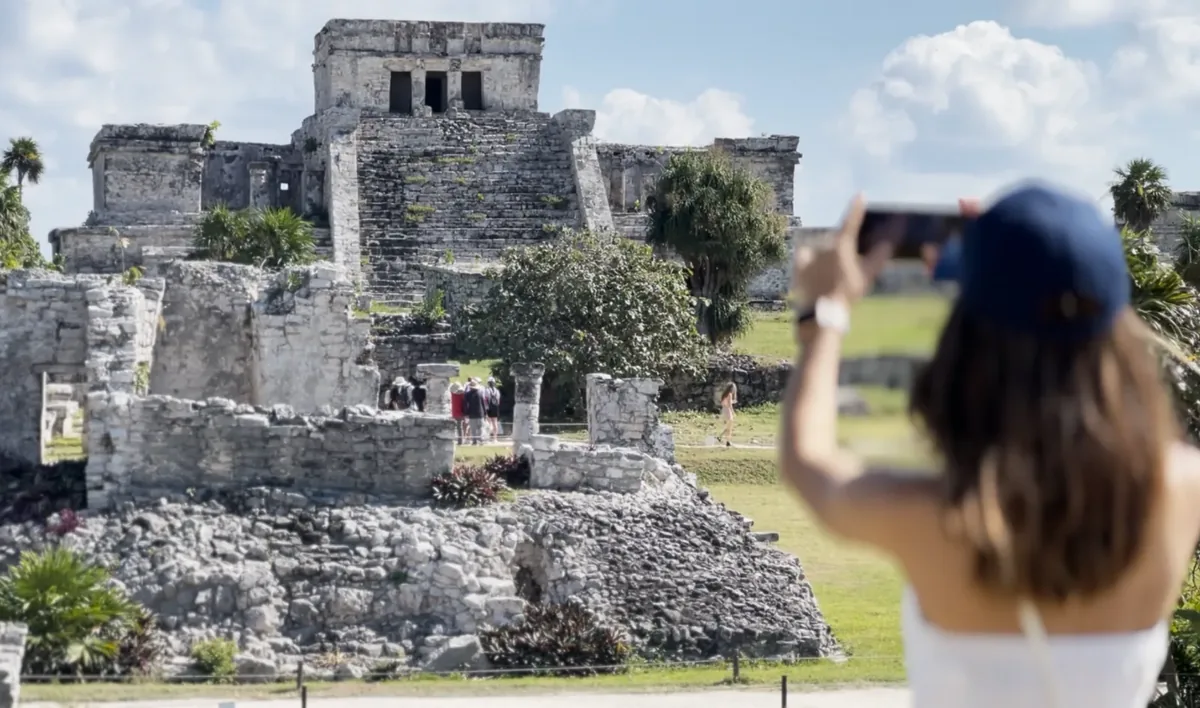
From Cancún: Tulum Ruins, Cenote Mariposa & Playa del Carmen
The budget-format archetype: coach transport from Cancún, the ruins, a cenote swim, and a stop in Playa del Carmen — everything decided for you. Rated 4.6 from 457 reviews, from $34 plus a $40 fee per adult paid in cash on the day.
Small-Group Tours
The middle ground. Typically capped around 10–12 people, occasionally up to 16, in a van rather than a coach.
What you gain over large-bus: less time lost to pickups, more chance to actually ask your guide questions, and often — though not always — an earlier departure.
What you still give up: it’s a fixed itinerary on a fixed schedule, shared with strangers. It’s a genuine improvement over the big coach, not a different category.
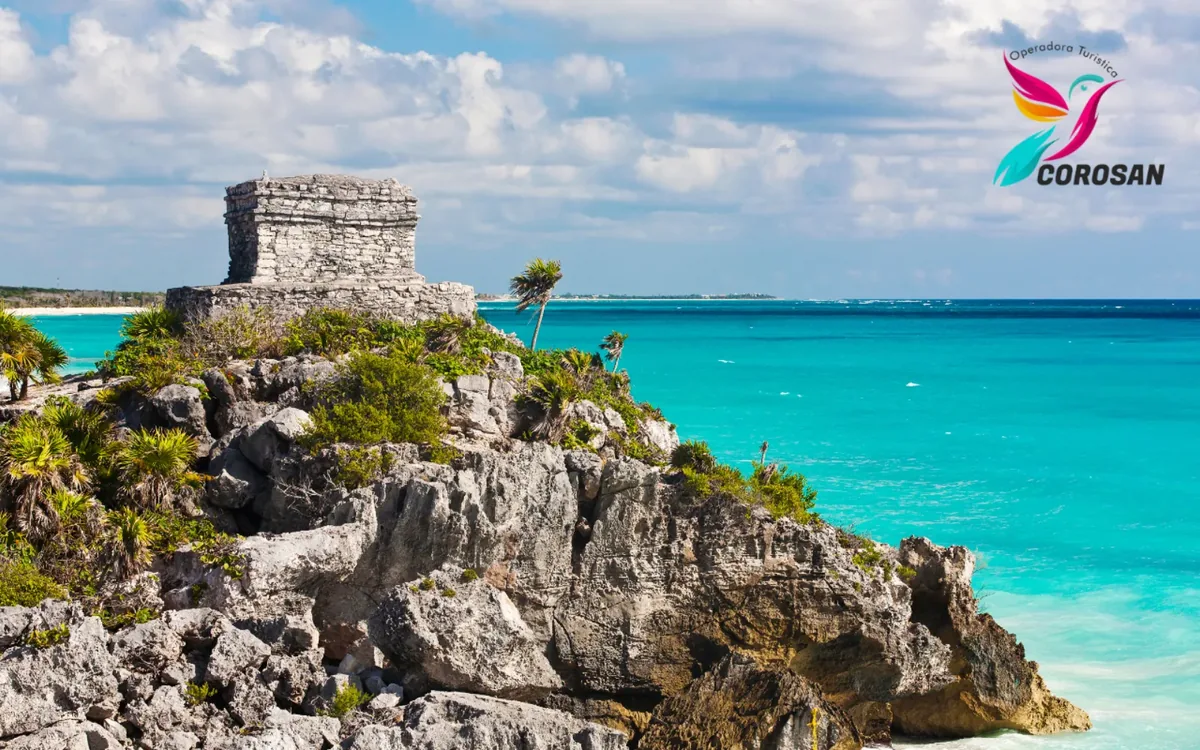
Tulum: Ruins, 2 Secret Cenotes and Mexican Lunch (Small Group)
An explicitly small-group day — the ruins, two quieter cenotes and lunch, at a size where you can still ask questions. Rated 5.0, though from a relatively small base of 35 reviews. From $165, plus a $50 conservation fee per person paid in cash when you board.
If you want the ruins alone rather than a full day out, the Tulum Archaeological Zone Guided Walking Tour in the calendar above is the shortest guided option — 1 hour 15 minutes on site with a certified guide, rated 4.9 from 110 reviews, from $17. It’s the baseline every other format is really being compared against.
Private Tours
Just your party, a guide, and a driver. Full control over pace, timing, and stops.
The number that matters here: 3 to 4 people. Private tours are priced per vehicle, not per head, so the per-person cost drops sharply as your group grows. For a solo traveler or a couple, private is genuinely the most expensive way to see Tulum. For a family of four or a group of friends, it often lands close to — sometimes level with — what a small-group tour would cost per person, while delivering complete flexibility.
Where private clearly wins regardless of group size:
- You can actually hit the 8 AM opening. No pickup loop, no waiting on other guests.
- Families with young kids — nap timing, bathroom stops, and a pace that doesn’t require herding a toddler through a coach schedule.
- Mobility-limited travelers — door pickup, a controlled pace, and the option to use drop-off points that minimize walking.
- Photographers — arriving early means empty frames and better light, without other tourists in every shot.
The honest trade-off: cost for solo travelers and couples, and the need to book further ahead — ideally 2–3 weeks out, earlier in peak season (mid-December through April).
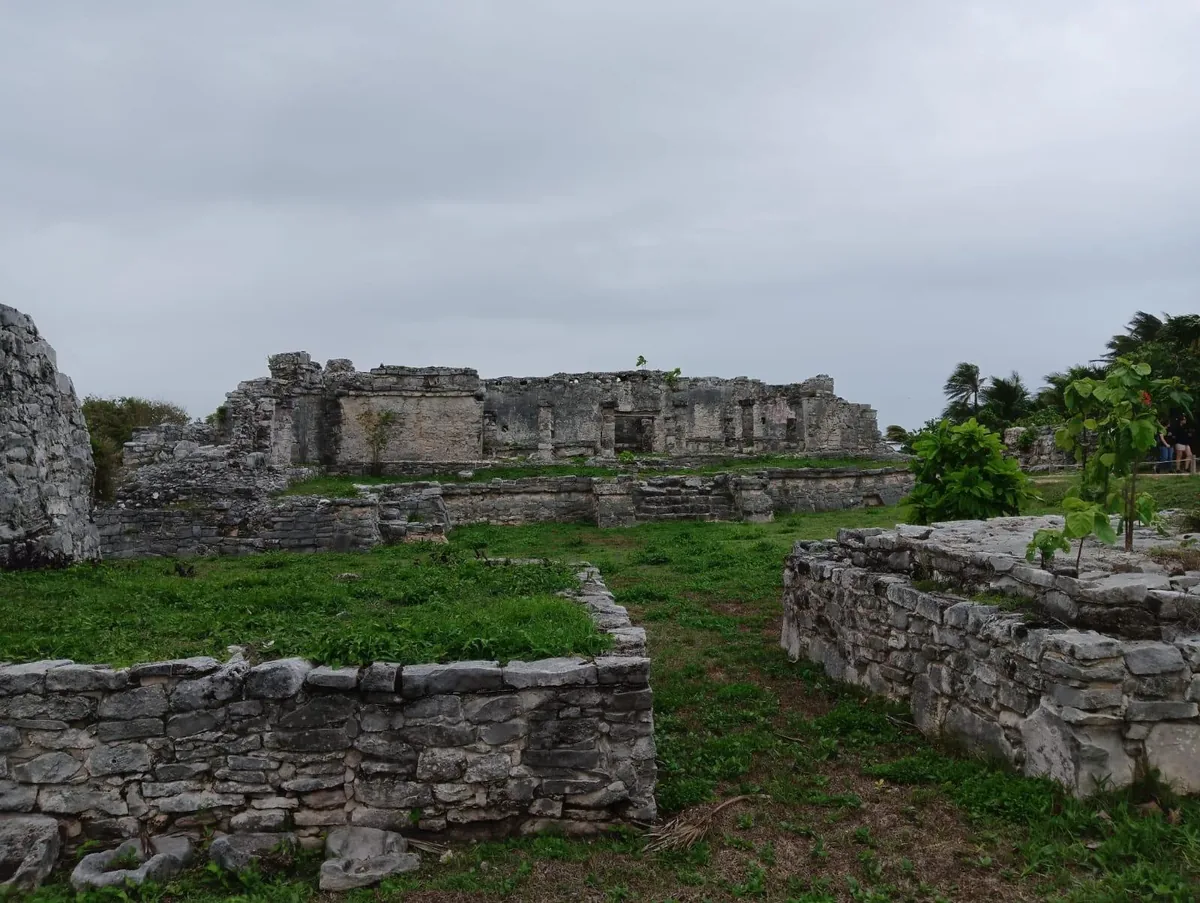
Tulum: Get a Private Guide to Show You the Mayan Ruins
The ruins-only private option — your party and a certified guide, at your pace, priced per group rather than per head. From $82. Worth knowing before you book: it now rates 4.5 from 13 reviews, down from a perfect score on a smaller sample, so read the recent reviews rather than the headline number.
For a full private day rather than the ruins alone, Private Tour Tulum: Archaeological Site, Turtles, Snorkel, Cenote and Beach adds Akumal and a cenote from $232 per person — rated 5.0, but on just 6 reviews, so treat that score as thin evidence rather than a track record.
Self-Guided — and the Hybrid Worth Knowing About
There are really two self-guided approaches, and they’re quite different.
Fully independent, no guide
Just transport and admission, relying on signage and your own preparation. Be aware this is genuinely contested territory: some visitors find Tulum’s on-site signage reasonably informative and multilingual; others — including several guides in the trade — call it minimal and largely Spanish-only. If you go this route without any preparation, you risk what one visitor put bluntly: without context, you’re “essentially just looking at piles of rocks.”
A middle path is a paid audio tour app, typically running $7–10 and covering roughly 40 minutes to two hours of content — a reasonable bridge if you want independence without walking in blind.
The hybrid: independent transport plus an on-site accredited guide
This is frequently the best value-to-experience ratio available, and it’s underused.
Arrange your own transport — see our Cancún, Playa del Carmen and Cozumel guides — then hire a licensed guide from the booth near the entrance once you arrive. As covered in our ticketing guide, this runs roughly 600–1,500 pesos in cash for a 90-minute-to-two-hour tour — the cheapest genuinely guided option available, and one you can hire either strictly for your own party or split as a small group with other travelers on the spot.
Languages: English and Spanish are near-universal among on-site guides; French, Italian and German are available from some, so ask before agreeing.
How to Verify a Guide Is Actually Accredited
This matters regardless of which format you choose, since the same pool of licensed guides works across every price tier.
Mexican tour guides are certified by SECTUR, the federal tourism secretariat, through a formal process: a 510-hour diploma course — 360 theoretical hours and a minimum 150 practical hours — plus a language proficiency exam and first-aid certification. Guides are classified as either Guía General (national scope) or Guía Local (site-specific).
By law, an accredited guide must visibly wear their credential while working. Under the current regulatory framework, that credential displays the guide’s full name, a credential number, their national tourism registry number, a photo, their accredited language(s), an issue date and expiry, and — on newer credentials — a QR code.
To verify a guide on the spot:
- Ask to see the physical badge. Check the photo matches the person and the credential hasn’t expired.
- Scan the QR code, if the credential has one.
- Cross-check the registry number against Mexico’s public tourism registry portal if you want certainty before committing.
One more useful fact: by law, no single accredited guide may lead a group larger than 25 people — a helpful benchmark if you’re ever unsure whether a “guide” gathering a large crowd is actually licensed.
Does the tour format itself affect guide quality? Less than you’d think. The same licensed guides work across large-bus operators, small-group companies, private tour businesses, and the on-site booth. What changes with format isn’t expertise — it’s the guide-to-guest ratio. A guide managing 30 people delivers necessarily different attention than one managing four, even if both are equally accredited and equally knowledgeable.
Common complaints span every format regardless of price: guides rushing through material for large groups, guides splitting explanations awkwardly between two languages sentence-by-sentence, scripted rather than genuinely knowledgeable delivery, and — occasionally — guides steering groups toward commission-paying shops. Accreditation reduces the risk of these, but doesn’t eliminate it; a badge confirms training, not enthusiasm.
The 8 AM Rule Applies to Every Format
We’ve said this elsewhere on this site and it’s worth repeating here specifically, because it’s the real lever — more than format, more than “skip the line” marketing.
The site opens at 08:00. Tour buses arrive 10:00–11:00. By 11:00 the ruins are near capacity and the heat is climbing.
Formats that reliably get you there at opening: private (you control the pickup time) and self-guided (you control everything).
Formats that usually don’t: large-bus, because of the pickup circuit.
Somewhere in between: small-group, which beats the coach but doesn’t guarantee opening-time arrival either.
“Skip the line” branding on any format is largely marketing — the real bottleneck is the ticket queue, and it forms regardless of what you booked. Early arrival is what actually avoids it.
What’s Typically Included, and Accessibility
Large-bus: transport, guide, entrance (sometimes bundled, sometimes added at checkout), often a cenote and lunch, water on board.
Small-group: van transport, guide, entrance (check whether it’s included or a separate on-site charge — some listings add a “reserve” or “entrance tax” line item not always disclosed upfront), often a cenote.
Private: private van and guide, entrance usually included, fully customizable add-ons — a cenote, Akumal, Cobá — and sometimes a photographer option.
Self-guided: whatever you arrange yourself — transport plus admission, with an optional on-site guide or audio app layered on top.
Cancellation: fixed-departure large-bus products tend to be strict, often non-refundable inside 24 hours. Private tours are generally the most flexible to reschedule.
Accessibility: Tulum is only partially wheelchair-accessible — roughly a kilometre’s walk (or a shuttle) from parking to the gate, followed by packed-dirt and stone paths, uneven terrain, some steps, and minimal shade. If mobility is a concern, private tours are the strongest option — door pickup, controlled pace, and the ability to use drop-off points that reduce walking. Cobá, with its available pedicabs, is sometimes suggested as a more accessible alternative site entirely.
Questions to Ask Before Booking, Whatever Format You Choose
- What’s the actual group size cap, and is it enforced?
- What time is pickup, and — critically — what time do we actually reach the ruins?
- What’s included versus paid on-site: entrance fee, any reserve or park tax, drinks?
- What language is the guide, and are they SECTUR-accredited?
- What’s the cancellation and reschedule policy?
- If it’s marketed as “private,” is it genuinely private, or will we be grouped with other travelers?
Red flags: “private” listings that quietly merge you with other bookings; group or vehicle sizes that don’t match what was advertised; surprise on-site fees not mentioned at checkout; skip-the-line vouchers requiring an off-site exchange that adds its own delay; and persistent pressure toward a shopping stop.
Booking lead time: large-bus and small-group tours are commonly bookable last-minute, even the day before. Private tours are best booked 2–3 weeks ahead, more in peak season. The hybrid on-site guide needs no advance booking at all.
Which Format Fits You?
Solo, budget-focused: self-guided, or split an on-site guide with other independent travelers you meet at the entrance.
Couple: the hybrid — your own transport plus an on-site guide — is usually the best value. Small-group if you’d rather have logistics handled. Private only if flexibility or privacy is worth the premium to you specifically.
Family with young kids: private. The pace control alone justifies it.
Group of three or four or more: private, on the economics alone — the per-person cost narrows enough that flexibility comes close to free.
Retirees or anyone with mobility limitations: private, for the door pickup and controlled pace; consider Cobá as an alternative site.
Photographers: private or self-guided, timed for the 08:00 opening and its light.
History enthusiasts: any format with a genuinely accredited guide — the hybrid on-site option delivers real depth at the lowest guided price.
Large friend groups: private van(s), typically the cheapest per head at this size and the most flexible.
Frequently Asked Questions
Are private Tulum tours worth it for a couple? Usually not on cost alone — private is priced per vehicle, so a couple pays the full rate. It’s worth it if flexibility, an early arrival, or privacy specifically matter to you; otherwise a small-group tour or the hybrid on-site-guide approach delivers similar value for less.
At what group size does a private tour become cheaper than small-group, per person? Roughly three to four people, since private tours are priced per vehicle rather than per head.
Can I just hire a guide at the Tulum entrance, and how do I know they’re legitimate? Yes — licensed guides work from a booth near the entrance. Check for a visible credential with a matching photo, a valid expiry date, and, on newer credentials, a QR code you can scan.
Do I need a guide at all, or is Tulum fine self-guided? It’s doable without one, but on-site signage is inconsistent, and without context the ropes-and-stones layout gives up little of its history. A paid audio app or an on-site accredited guide solves this cheaply.
Which tour format lets me arrive at the 8 AM opening? Private and self-guided most reliably. Small-group sometimes. Large-bus rarely, because of the multi-hotel pickup circuit.
Do “skip the line” tickets actually save time? Not meaningfully. The real bottleneck is the entrance queue at any given hour, and it forms regardless of ticket type. Early arrival is what actually avoids it — see our complete Tulum ruins tours guide for more on this.
What languages are guides available in? English and Spanish are near-universal. French, Italian and German are available from some private operators and some on-site independent guides — confirm before booking or hiring.
Is Tulum accessible for wheelchair users or those with limited mobility? Partially. Expect uneven paths, some steps, and a walk from parking to the gate. Private tours offer the most control over pace and access points.
How far ahead should I book? Large-bus and small-group tours are usually fine to book last-minute. Private tours are best arranged 2–3 weeks ahead, earlier in peak season (mid-December to April).
What are the biggest red flags to watch for? “Private” tours that turn out to be shared, group sizes that don’t match what was advertised, undisclosed on-site fees, and persistent shopping-stop pressure.
Booking
Whichever format fits your trip, the same principle holds: get there early, and confirm your guide is genuinely accredited.
Ready to book? Check availability for the featured guided walking tour above, or see the complete Tulum ruins tours guide for every tour type and departure point.
Related: the complete Tulum ruins guide · Tulum ruins tickets and entry fees · Tulum ruins and cenote tours · combining Tulum and Chichén Itzá · what to expect at the ruins
Guide accreditation details and format comparisons verified August 2026. Ratings and review counts re-checked live on 25 August 2026 and will drift as new guests review. Group size caps and inclusions vary by operator and listing — confirm specifics before booking.
Walk Through 800 Years of Maya History
Join guests who rated this guided walking tour 4.9/5. A certified local guide, skip-the-confusion entry, and beach access afterward — all included. Free cancellation.
Check Availability & Book