Tulum Bike Tours: Ruins, Cenotes, and Jungle by Bicycle
Biking is the cheapest, most flexible way to reach the Tulum ruins from town. Route, rental costs, cenote rides, and guided jungle tours — with honest safety notes.
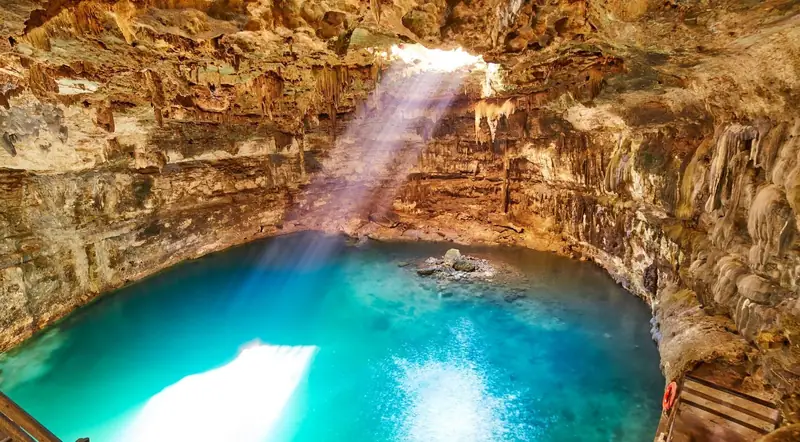
Of all the ways to reach the Tulum ruins, biking is the one nobody regrets.
It’s cheaper than a taxi, more flexible than a tour bus, and the route from town runs mostly on its own dedicated path — flat, shaded in patches, and genuinely pleasant. This covers the ride itself, where to rent, how far you can realistically push it toward the cenotes, and the guided jungle options if you’d rather not navigate alone. If you’d rather have the whole day handled — bike, guide, cenote and lunch included — that’s bookable too:
The Route From Town to the Ruins
Distance and time: roughly 3 to 4 km from Tulum Pueblo to the archaeological zone, depending on your starting point. Budget 10 to 30 minutes — confident riders on the more direct route often do it in under 15; anyone starting from the far end of the hotel zone should allow closer to 30.
The path itself. A dedicated, well-marked bike lane — locally called the Camino Blanco — runs from the town centre out toward the site, separated from car traffic with a genuine buffer zone rather than just a painted line. A second option follows the bike lane along Highway 307 from the Boca Paila intersection, a slightly more direct route. Both are flat, low-stress rides suitable for casual cyclists and families with older kids.
Best time to ride: early morning, for the same reason you’d want to arrive at the ruins early anyway — see our best-time-to-visit guide. Cooler temperatures, softer light, and a ride that isn’t a sweat-soaked slog before you’ve even reached the gate.
Other Experiences You Might Enjoy
A bike gets you to the gate cheaply, but the rest of the Riviera Maya is beyond pedalling range. The cenotes along the Cobá road — Calavera, Gran Cenote, Cristal y Escondido — are the exception and covered below; further afield, sea turtle snorkelling at Akumal, the climbable jungle pyramid at Cobá, the Muyil ruins and the lagoon float through the Sian Ka’an Biosphere Reserve, and a full day out to Chichén Itzá all need a vehicle. Current availability and pricing for these and other Tulum-area tours are below.
Renting a Bike in Tulum
Standard beach cruisers run roughly 80–250 pesos per day at town shops, generally including a lock and basket. Multi-day rentals typically bring the daily rate down further. Most shops don’t provide helmets — Quintana Roo doesn’t legally require them for cyclists — so bring your own if that matters to you.
Expect a deposit, commonly around 1,000 pesos, or an ID hold; many shops accept a driver’s licence rather than requiring your passport. Hotel delivery is common for a small surcharge, and plenty of hotels in town and the beach zone lend bikes to guests directly, though quality varies — dedicated rental shops are generally better maintained than hotel-owned bikes.
E-bikes are widely available, typically 350–500 pesos per day, and worth the upgrade if you’re visiting in peak heat months or simply want to arrive at the ruins without being drenched in sweat.
Verify before you travel. Rental rates change; confirm current pricing with your chosen shop.
Bikes and Parque del Jaguar: What’s Actually Allowed
This trips people up, because the two things you’ll read online sound contradictory. They’re not — they just describe two different boundaries.
You can ride your bike into the park itself. A paved path continues from the town bike lane straight into Parque del Jaguar, and having a bike is genuinely useful for getting around within the reserve.
You cannot ride inside the ticketed archaeological zone. Lock your bike at the racks outside the ruins gate and continue on foot, or take the electric shuttle, which costs 20 pesos on top of your entry ticket — covered in our ticketing guide. Bike parking itself is free, unlike car parking, but rack security is inconsistent, so bring a solid lock.
On fees: entry to Parque del Jaguar and the ruins has changed more than once recently, most recently in a decree that took effect in July 2026. See our ticketing article for the current breakdown — don’t rely on older figures you may have seen elsewhere.
Biking to the Cenotes
The Cobá road, running in the opposite direction from the beach, is where the cenote action is. Cenote Calavera sits closest, about 2–3 km out; Gran Cenote is around 5 km, roughly 15–20 minutes by bike; Cristal y Escondido and Car Wash (Aktun Ha) sit further along the same road. All are covered in detail in our cenotes guide.
A safety note worth taking seriously. Unlike the ruins path, the Cobá road is not fully separated bike infrastructure — it’s a real road without a consistent shoulder. Confident adult cyclists ride it regularly without issue, but it’s a different proposition with children, and locals are frank about not recommending it for that reason. If you’re riding with kids, stick to guided cenote transport or the ruins-access path only.
Bring cash. Every cenote entry is cash-only, and fees have climbed noticeably in recent years — don’t assume an older published price is current.
A Self-Guided Day: Ruins, Bike, Cenote
This is a genuinely popular, entirely doable independent itinerary, and here’s the shape of it:
- Rent your bike the evening before, so you’re not waiting on a shop to open.
- Ride to the ruins for the 8 AM opening — the coolest, quietest window of the day.
- Spend 90 minutes to two hours inside, then collect your bike from the racks.
- Ride out to a nearby cenote — Calavera or Gran Cenote if you’re starting close to town — to cool off before the day’s heat peaks.
- Head back before midday, when both the heat and the Cobá road traffic pick up.
Pack snorkel gear if you have it (renting in town is cheaper than at the cenote gate), cash for entry, and more water than you think you’ll need. Our structure-by-structure walkthrough is worth reading before you go, since riding in solo means no guide to explain what you’re looking at.
Jungle and Nature Bike Tours
Beyond the simple ruins-access ride, several operators run guided rides that go further into the surrounding landscape.
Ruins-plus-culture combos pair the archaeological site with local stops — street art, a taco breakfast, a native stingless-bee sanctuary, and a cenote swim — broken into short, easy cycling segments between each. A comfortable, low-difficulty option that adds context you wouldn’t get riding solo.
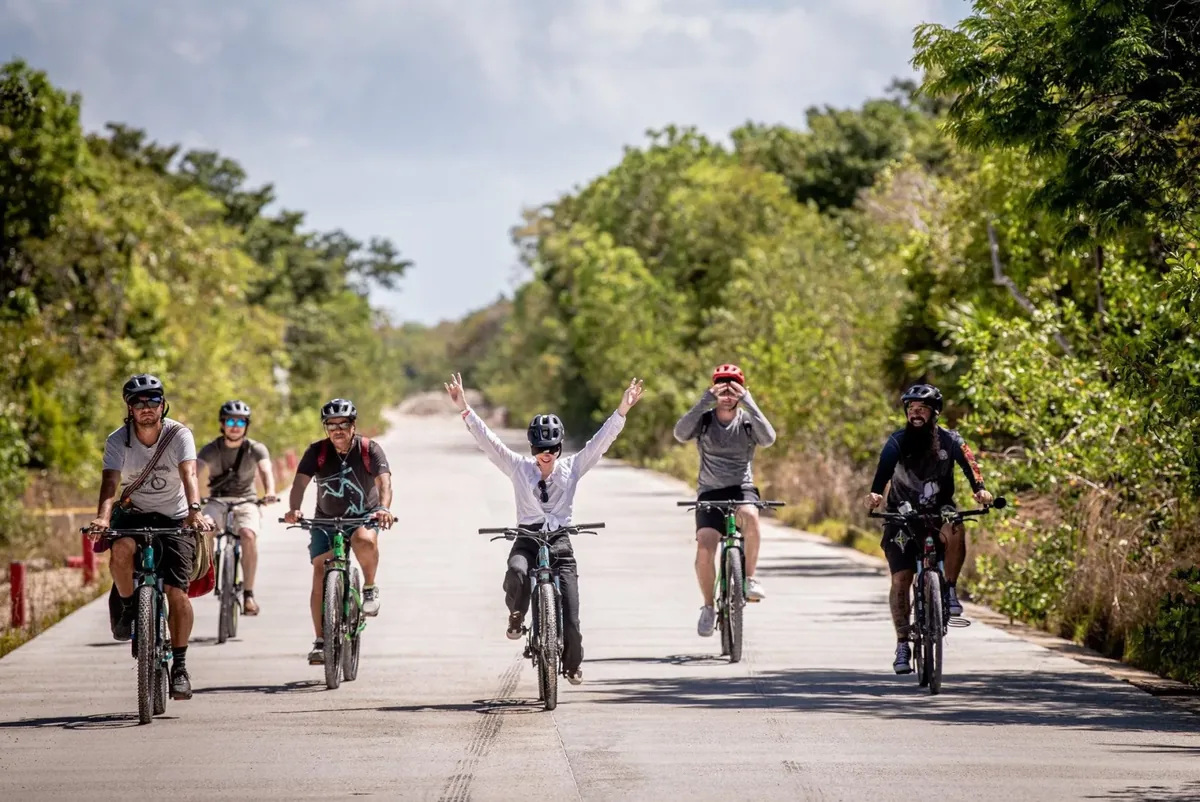
Tulum: Guided Bike Tour of Tulum Ruins, Tacos & Cenote
The ruins-plus-culture combo in practice — short cycling segments linking the archaeological zone, a taco stop and a cenote swim, with the bike and the navigating handled. Rated 4.9, though on a thin base of just 13 reviews. From $109.
Jungle-trail cenote rides take you off paved roads entirely, onto quiet forest trails with essentially no traffic, connecting several cenotes via mountain bike. Terrain is easy but can be muddy depending on recent rain.
Sian Ka’an biosphere tours go further and harder — cycling to the Boca Paila bridge before switching to a mangrove and lagoon boat trip, sometimes paired with the smaller Muyil ruins. This is a genuine workout, not a leisure ride, and worth knowing that going in. Many operators set minimum ages, commonly around 8 to 12, for the longer combination tours.
Safety: What to Actually Watch For
Stay off Highway 307. It’s a fast, divided highway, and it is not built with cyclists in mind — locals treat it as genuinely dangerous even for scooters, let alone bicycles. Use the dedicated bike lanes and the quieter Cobá road only, never the highway itself, and never ride after dark.
Respect the heat. Cycling is meaningfully more exertion than walking, and Tulum offers very little shade along most routes. Ride early, carry at least a litre and a half of water, and if you’re visiting during peak summer heat, seriously consider an e-bike or simply skipping the bike in favour of a shaded taxi for the return leg.
Pack accordingly: closed shoes for the ride (sandals in your bag for the beach or cenote), reef-safe sunscreen — required at cenotes and inside the ruins zone regardless — a hat, sunglasses, a dry bag for your phone, cash, and a decent lock.
Who This Is Right For
Bike suits you well if you’re a budget traveller, reasonably fit, want the flexibility of a self-guided day, or you’re travelling with older kids who can handle a flat, easy ride.
Bike is a poorer fit if you have very young children, any mobility limitations, real heat sensitivity, or you specifically want deep guided historical context — biking gets you there efficiently, but it doesn’t teach you anything about what you’re looking at once you arrive.
The best of both worlds: bike to the ruins to save time and money on transport, then hire an accredited guide at the entrance once you’re there. We cover exactly this hybrid approach — arguably the smartest way to visit independently — in our guide to tour formats.
Frequently Asked Questions
How far is it to bike from Tulum town to the ruins, and how long does it take? Roughly 3 to 4 km, taking 10 to 30 minutes depending on your starting point and pace.
Can I ride my bike inside the Tulum ruins or Parque del Jaguar? You can ride the paved path within Parque del Jaguar, but bikes aren’t allowed inside the ticketed archaeological zone itself. Lock up at the racks outside the gate and continue on foot or via the free electric shuttle.
How much does it cost to rent a bike in Tulum? Standard cruisers run roughly 80–250 pesos per day; e-bikes run 350–500 pesos. Confirm current rates before you travel.
Do I need a helmet to cycle in Tulum? Not legally, and most rental shops don’t provide one — bring your own if it matters to you.
Can I bike to the cenotes near Tulum, and is it safe? Yes, several are within a 15–20 minute ride via the Cobá road, but that road lacks a consistent shoulder. It’s manageable for confident adult riders, less advisable for families with children.
Is biking in Tulum safe generally? What about Highway 307? The dedicated town-to-ruins bike lane is genuinely safe and well-separated from traffic. Highway 307 itself is not appropriate for cyclists at any time — stick to bike lanes and quieter roads only.
Are e-bikes available, and are they worth it? Yes, widely available, and worth considering in peak heat months or if you’d rather arrive without being exhausted.
Should I take a guided bike tour or go self-guided? Self-guided works well if you’re comfortable navigating and want flexibility and lower cost. A guided tour adds context and handles logistics — useful if you want the cultural stops (like a bee sanctuary or jungle cenotes) built into the route for you.
Get Rolling
Whether you go self-guided or book a guided ride, biking remains the best combination of cost, flexibility, and genuine enjoyment of any way to reach the ruins.
Ready to book? Check availability for the guided bike tour above, or see the complete Tulum ruins tours guide for every other way to get there.
Related: the complete Tulum ruins guide · Tulum ruins tickets and entry fees · Tulum ruins and cenote tours · private vs. small-group vs. self-guided formats · best time to visit
Route, rental, and fee information verified August 2026. Cenote and park entry fees change — confirm current pricing before your visit. Ratings and review counts re-checked live on 25 August 2026 and will drift as new guests review.
Walk Through 800 Years of Maya History
Join guests who rated this guided walking tour 4.9/5. A certified local guide, skip-the-confusion entry, and beach access afterward — all included. Free cancellation.
Check Availability & Book