Tulum and Chichén Itzá: Should You Combine Them in One Trip?
Tulum and Chichén Itzá are 2 hours apart — here's the honest verdict on combining them, a real time-budget breakdown, and the smarter two-day alternative.
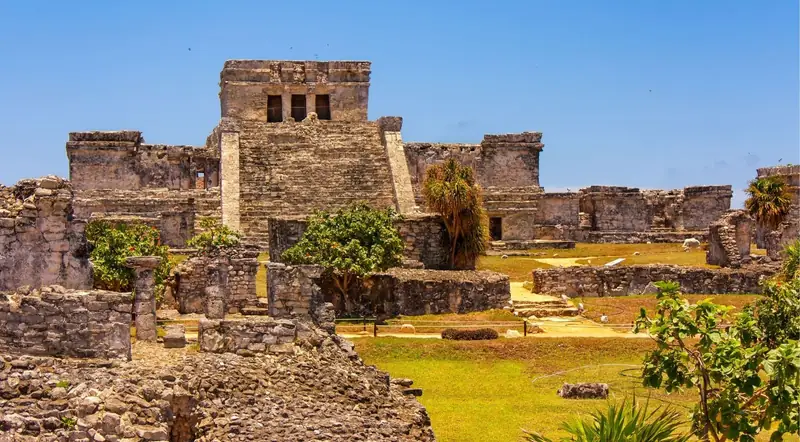
Here’s the honest answer up front: don’t try to see both in a single day.
Tulum and Chichén Itzá sit roughly 150 km apart — about two hours’ drive through Valladolid, longer in practice once you count ticket lines and stops. Cramming both into one day means five-plus hours in a vehicle for maybe four hours total at two of the most significant Maya sites on earth, and it puts you at Chichén Itzá right at midday, when the heat and the tour buses both peak.
If you have a week or more, see them on separate days. If you have three or four days total, pick one. And if you genuinely want both back to back, the answer isn’t a longer single day — it’s a second day, with a night in between. The version that does work as a single day is Chichén Itzá paired with a cenote and Valladolid — no Tulum in the mix:
Tulum vs Chichén Itzá: The Real Comparison
These aren’t competing versions of the same experience. They’re genuinely different, and knowing how helps you decide. (If you’re choosing between them rather than combining them, our Tulum vs Chichén Itzá comparison is the shorter, decision-first version of this section.)
Scale. Chichén Itzá wins decisively. The site covers more than 4 square kilometres with dozens of structures — the Kukulcán pyramid, the largest ball court in Mesoamerica, the Temple of the Warriors, the Group of a Thousand Columns. Tulum is a compact walled settlement by comparison; its structures are modest.
Setting. Tulum wins decisively here. It’s the only major Maya site built directly on the Caribbean, perched on a limestone cliff above turquoise water. Chichén Itzá sits inland, flat and hot, near the town of Pisté — historically extraordinary, but without the postcard backdrop.
Time needed. Tulum: 1 to 1.5 hours is enough for most visitors. Chichén Itzá: 2 to 3 hours, given its scale and the value a guide adds where signage is thin.
Cost. Tulum runs 265 pesos for foreign adults under the current fee structure — see our ticketing guide. Chichén Itzá runs roughly 697 pesos, making it one of the more expensive archaeological sites in Mexico.
Climbing. Neither pyramid can be climbed. At Chichén Itzá, climbing was banned after an 80-year-old visitor fell and died descending El Castillo’s 91 steps in January 2006; the prohibition was formalised in 2008. Tulum’s structures have been roped off since 1994. If climbing a pyramid matters to you, look at Cobá near Tulum or Ek Balam near Valladolid — both still permit it.
Status. Chichén Itzá is a UNESCO World Heritage Site (inscribed 1988) and one of the New7Wonders of the World, named in a global 2007 poll — the only Maya site on that list. Tulum holds neither designation.
Crowds. Both are busy, but Chichén Itzá is Mexico’s single most-visited archaeological site — over 2.1 million visitors in 2025 — with large tour buses arriving from the coast around 10–11 AM. The fix at both sites is identical: arrive at opening.
Comparison at a glance
| Tulum | Chichén Itzá | |
|---|---|---|
| Setting | Clifftop, Caribbean | Inland jungle/scrub |
| Scale | Compact | Sprawling, 4+ km² |
| Time needed | 1–1.5 hrs | 2–3 hrs |
| Foreign adult entry | 265 pesos | 697 pesos |
| Climbable | No | No |
| Status | Neither | UNESCO + New7Wonders |
| Hours | 08:00–17:00, last entry 15:30 | 08:00–17:00, last entry ~16:00 |
| Time zone | Quintana Roo | Yucatán (1 hour behind) |
So which is better? If you want the bucket-list wonder and monumental history, Chichén Itzá edges it. If you want ease, coastal beauty, and a visit you can pair naturally with a beach afternoon or a cenote, Tulum wins. Plenty of travellers genuinely prefer Tulum — this isn’t a consolation prize.
Other Experiences You Might Enjoy
If Chichén Itzá is becoming its own day, the Tulum end of the trip has plenty left to fill: a cenote swim at Cenote Mariposa, sea turtle snorkelling at Akumal, the climbable jungle pyramid at Cobá, or a boat trip through the Sian Ka’an Biosphere Reserve and the Muyil ruins south of town. Current availability and pricing for these and other Tulum-area tours are below.
The Distance Problem
Tulum and Chichén Itzá sit about 150 km apart via Highway 180D, the toll road through Valladolid — roughly two hours in good conditions, closer to 2.5 hours once you account for ticket lines, a stop, and traffic near Pisté.
Two details make a same-day attempt worse than the raw distance suggests. First, the sites sit in different time zones — Yucatán, home to Chichén Itzá, runs an hour behind Quintana Roo. Second, both sites reward arriving at opening, and you cannot physically be at both when the gates open.
What a same-day attempt actually looks like
| Time | Activity |
|---|---|
| 7:15 AM | Depart for Tulum |
| 8:00–9:30 AM | Tulum (rushed, ~1.5 hrs) |
| 9:30 AM–12:00 PM | Drive to Chichén Itzá (~2.5 hrs) |
| 12:00–2:30 PM | Chichén Itzá — peak heat, peak crowds |
| 2:30–5:00 PM | Drive back |
| ~5:00 PM | Arrive, exhausted |
That’s roughly five hours in a vehicle for about four hours across two sites — and you hit Chichén Itzá at exactly the wrong time of day.
Do reputable operators actually sell this as a single day? Some list it, but the credible versions of “Tulum + Chichén Itzá” are almost always two-day products with an overnight, or they pair Chichén Itzá with a nearby cenote and Valladolid rather than with the Tulum ruins specifically — because that’s the itinerary that actually works. Treat any tour promising both sites from the coast in a single day as a red flag for a long, exhausting day rather than a good deal.
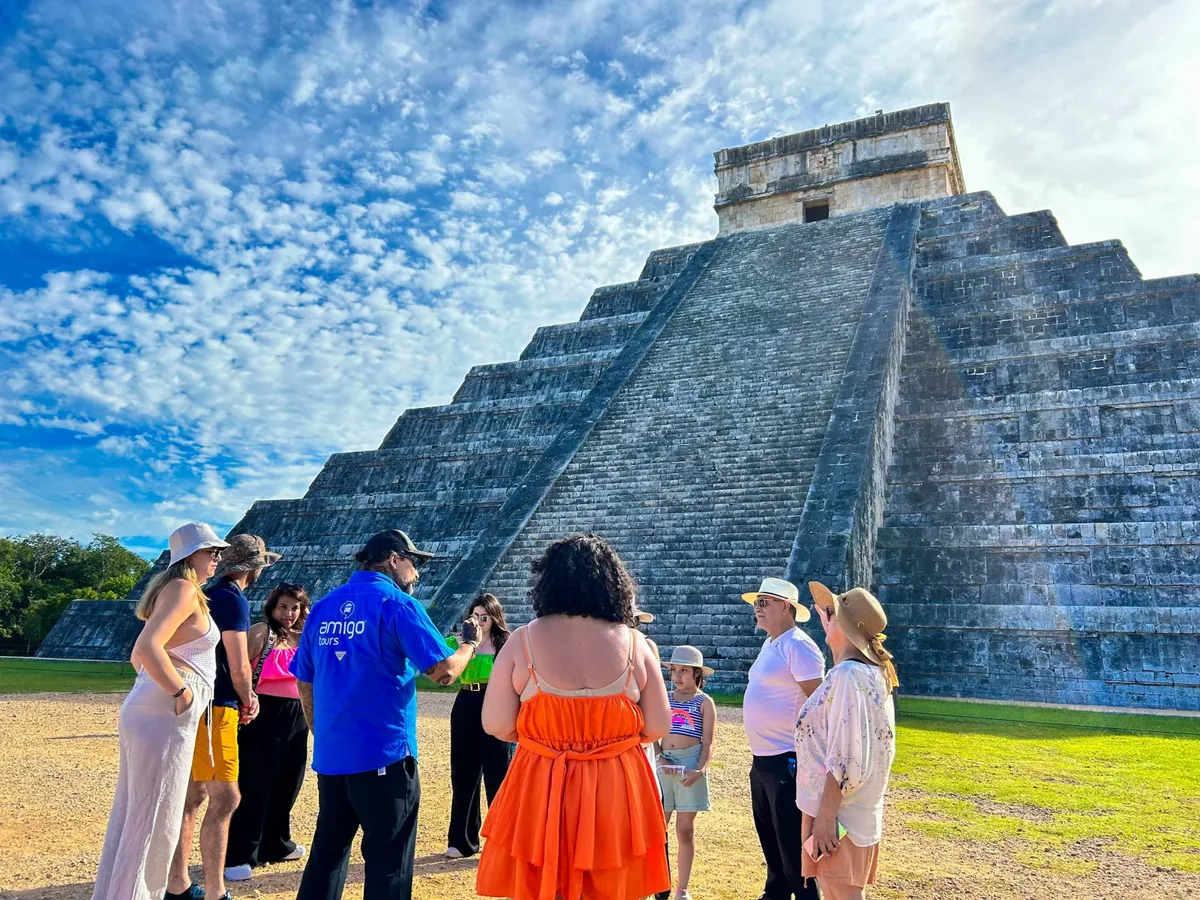
Cancún: Chichén Itzá, Cenote & Valladolid Tour with Lunch
The pairing that actually fits in a day — Chichén Itzá with a cenote swim, lunch and a stop in Valladolid, and no attempt to squeeze Tulum in as well. Rated 4.6 from 8,649 reviews, from $57.
The Better Way: Two Days, Not One
Overnight in Valladolid. This is the smart version of the combo. Valladolid sits almost exactly at the midpoint — about 45 minutes from Chichén Itzá, roughly 1h45–2 hours from Tulum. Stay a night here and you can be at Chichén Itzá for the 8 AM opening, ahead of the buses, which is the single biggest crowd-avoidance move available at that site. It’s also a genuinely worthwhile stop in its own right — a colonial Pueblo Mágico with its own in-town cenote, colourful streets, and food considerably cheaper than the Riviera Maya.
Two separate day trips. If changing hotels isn’t appealing, simply do Tulum and Chichén Itzá on different days from a Playa del Carmen or Tulum base. Tulum is an easy half-day; a Chichén Itzá day trip from the coast runs a full 10–12 hours door-to-door, as we cover in our Playa del Carmen departure guide — so budget it as its own full day, not an add-on.
For the Tulum half of a two-day plan, the Tulum Archaeological Zone Guided Walking Tour is the efficient option — 1 hour 15 minutes on site with a certified guide and beach access afterward, rated 4.9 from 110 reviews, from $17. It leaves the rest of that day free, which is the whole point of not stacking the two sites together.
Does the Tren Maya Help? No
It sounds like it should, but it doesn’t solve this particular pairing.
There’s no direct east-west train between Tulum and Chichén Itzá. The coastal line and the inland line meet at Cancún Airport, so a Tulum-to-Chichén trip by rail actually runs north to Cancún first, then west — an L-shaped route taking around four hours, against a 2.5-hour direct drive.
The schedule makes it worse. The relevant through-service currently departs Tulum in the late afternoon and arrives at Chichén Itzá after the site has already closed for the day — forcing an overnight regardless. For this specific point-to-point trip, a rental car, the ADO bus, or a guided tour all beat the train. The train earns its keep if you’re building a longer Yucatán loop and staying in Valladolid anyway — just not as a same-day shortcut.
Who Should Combine Them — and Who Shouldn’t
Three to four days total in the region: pick one. Tulum is the easier, lower-commitment choice unless Chichén Itzá is genuinely non-negotiable for you.
A week or more: do both, on separate days, unhurried.
Efficiency-minded travellers willing to accept a long day: even you are better served by splitting this across two days with a Valladolid night than by one combo day — you’ll see more and feel better doing it.
Families with young children, older travellers, or anyone with limited heat tolerance: skip the combo day entirely. Five-plus hours in a vehicle plus midday heat at a large, shadeless site is a rough day for anyone; it’s a genuinely bad one for young kids or grandparents.
If you insist on both within one trip, the least-bad version is always two days — either the Valladolid overnight or two independent day trips. Never a single coast-to-coast dash.
Visiting Chichén Itzá: What’s Changed
Chichén Itzá has had an eventful 2026 — echoing the fee overhaul we documented at Tulum itself.
Hours and tickets
Open daily, 08:00–17:00, with last admission around 16:00. Remember the one-hour time difference from the coast when you’re planning your morning.
The ticketing system changed substantially in March 2026. For years, Chichén Itzá required two separate tickets at two separate windows — a federal INAH fee and a much larger Yucatán state fee — a system that produced long, confusing double-queues, much like the multi-counter process we documented at Tulum. As of 27 March 2026, a single unified ticket (“Boleto Único”) replaced that system.
Current fee: roughly 697 pesos for foreign adults. Mexican nationals pay considerably less, and Yucatán state residents now enter free year-round under a 2026 state decree. As at Tulum, foreign visitors don’t receive national discounts and aren’t free on Sundays — the same pattern we flagged in our ticketing guide. Bring cash pesos; card terminals fail often.
The new visitor center
A new entry facility, CATVI, opened alongside the ticket change in late March 2026, next to the Maya Train station and the site’s museum. It’s now the mandatory entry point, with expanded parking and a relocated artisan market.
That relocation wasn’t smooth: Chichén Itzá closed for 13 days, from 19 May to 1 June 2026, after local vendors and artisans protested being moved to the new center. It reopened on 1 June following an agreement, and has operated normally since — but confirm current status close to your travel date, since 2026 has been a year of real flux at this site.
Best time to visit
Exactly the same rule as Tulum: arrive at the 8 AM opening. The 8–10 AM window is calm and cool; large bus groups from the coast typically arrive 10–11 AM and stay heavy through early afternoon. For coastal travellers, the only reliable way to actually achieve an 8 AM arrival is staying in Valladolid the night before.
The equinox phenomenon
Around the spring equinox (20–21 March) and autumn equinox (around 22 September), late-afternoon sunlight casts a sequence of triangular shadows down El Castillo’s northern staircase, creating the illusion of a serpent — Kukulcán — descending to the carved serpent head at its base. Best viewed roughly 3–5 PM.
It’s spectacular, and it draws enormous crowds — INAH recorded over 15,000 visitors witnessing the March 2026 descent. If the phenomenon itself is your priority, expect maximum crowds and plan accordingly. If you’d rather have the site to yourself, visit on any other date.
The evening light show
A separate evening sound-and-light experience, “Noches de Kukulkán,” runs on its own ticket, typically starting around 7 PM depending on season, and projects Maya history and imagery onto the structures.
Valladolid, the Natural Midpoint
Worth knowing even if you don’t stay overnight: Valladolid sits almost exactly between the two sites — about 45 minutes from Chichén Itzá, 1h45–2 hours from Tulum — which is why nearly every sensible two-site itinerary passes through or stops here.
Beyond its role as a waypoint, it’s a destination in its own right: a colonial Pueblo Mágico with a cenote right in town (Zací), several more nearby (Suytun, X’kekén, Oxman), colourful colonial streets, and the climbable Ek Balam ruins about 30 minutes away. Accommodation runs considerably cheaper than Tulum or Playa del Carmen.
Frequently Asked Questions
Can you visit Tulum and Chichén Itzá in the same day? Technically, but you shouldn’t. It means five-plus hours of driving for a rushed visit to each site, and you’ll hit Chichén Itzá at its hottest and most crowded. Split it across two days instead.
How far is Chichén Itzá from Tulum? About 150 km, roughly two hours by direct drive via Highway 180D through Valladolid — closer to 2.5 hours in practice.
Which is better, Tulum or Chichén Itzá? Chichén Itzá for scale, history and bucket-list status; Tulum for its coastal setting and shorter, easier visit. They’re genuinely different experiences rather than one being a lesser version of the other — our side-by-side comparison walks through the choice.
Can you climb the pyramid at Chichén Itzá? No. Climbing has been banned since a fatal fall in January 2006. Tulum’s structures are similarly off-limits. Cobá and Ek Balam still allow climbing, if that matters to you.
How much does Chichén Itzá cost in 2026? Around 697 pesos for foreign adults, now purchased as a single unified ticket at the new CATVI visitor center. Tulum runs 265 pesos by comparison.
Is Chichén Itzá currently open? Yes — it reopened 1 June 2026 after a 13-day closure tied to a vendor relocation dispute, and has run normally since. Confirm current status close to your travel date given how much has shifted this year.
Can I take the Tren Maya from Tulum to Chichén Itzá? Not practically for a same-day trip. There’s no direct route — it runs through Cancún first, taking around four hours, and the relevant service arrives after the site closes. A car, bus, or tour is faster and simpler.
Where should I stay to see both sites? Valladolid is the ideal base — close to Chichén Itzá, a reasonable distance from Tulum, and a worthwhile stop in itself.
What’s the best time to visit Chichén Itzá? Right at the 8 AM opening. Tour buses from the coast arrive 10–11 AM and the site stays busy into early afternoon.
The Bottom Line
If you take one thing from this guide: resist any itinerary that promises both sites in a single day from the coast. It’s not a shortcut — it’s five hours of driving in exchange for a rushed, overheated version of two sites that each deserve better. Give them separate days, or one night in Valladolid, and you’ll actually remember both.
Ready to book? Check availability for the Chichén Itzá, cenote and Valladolid day above, or see the complete Tulum ruins tours guide for the Tulum half of the trip.
Related: the complete Tulum ruins guide · Tulum vs Chichén Itzá, compared · Tulum ruins tickets and entry fees · Tulum tours from Playa del Carmen · private vs small-group tour formats
Fees, hours and site status verified August 2026. Ratings and review counts re-checked live on 25 August 2026 and will drift as new guests review. Both Tulum and Chichén Itzá have seen major policy changes in 2026 — confirm current details before travelling.
Walk Through 800 Years of Maya History
Join guests who rated this guided walking tour 4.9/5. A certified local guide, skip-the-confusion entry, and beach access afterward — all included. Free cancellation.
Check Availability & Book