Tulum Ruins + Akumal Turtle Snorkeling: The Complete Combo Guide
Pairing the Tulum ruins with Akumal's wild sea turtles is one of the region's best combo days. The rules, the timing, the sargassum picture, and an honest verdict.
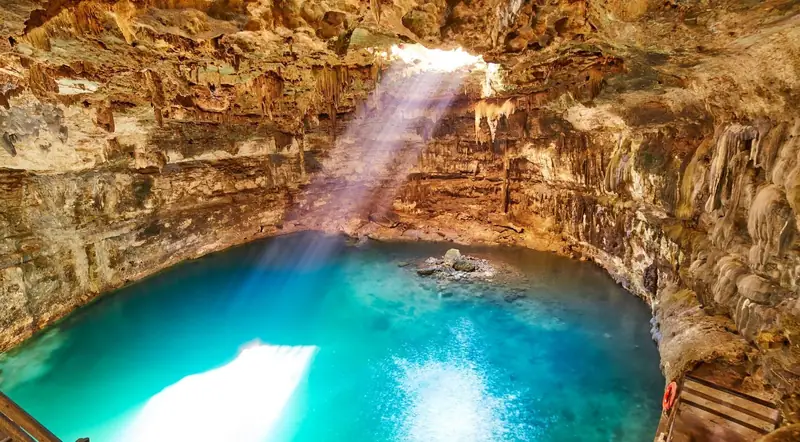
Akumal means “Place of the Turtles” in Maya, and the name isn’t marketing — it’s a description. This shallow, reef-protected bay holds a resident population of wild green sea turtles you can be snorkelling alongside within minutes of wading off the beach. Paired with the Tulum ruins, 20 to 30 minutes down the highway, it makes one of the strongest combo days anywhere on this coast.
It’s also one of the most misunderstood activities in the region. The rules around swimming with the turtles are genuinely strict, genuinely enforced, and worth understanding before you go — for your own experience as much as for the turtles. If you’d rather have the whole day handled, the packaged version of this combo pairs the ruins, a cenote and the Akumal turtle swim in a single run:
Where Akumal Is, and Why the Turtles Are There
Akumal sits on Highway 307 about 25 km north of the Tulum ruins — a 20 to 30 minute drive — roughly midway between Tulum and Playa del Carmen. It’s a small, U-shaped bay sheltered by an outer coral reef, with extensive shallow seagrass beds carpeting the sandy bottom just offshore.
That seagrass is the whole story. It’s the primary food source for green sea turtles, and the bay’s calm, shallow, reef-protected water makes it close to ideal habitat. The turtles you’ll see are almost entirely green sea turtles, and they’re here year-round — this isn’t a seasonal migration event, it’s a resident population. Loggerheads nest on nearby beaches and hawksbills turn up near the reef occasionally, but green turtles are what you’re coming for.
The Rules for Swimming With the Turtles
Akumal Bay has been a federally protected marine refuge since 2016, administered by Mexico’s national protected-areas agency with enforcement support from federal environmental and naval authorities. The rules that followed are strict, actively enforced, and worth taking seriously — both because they protect a genuinely vulnerable species and because ignoring them can get you fined.
A licensed guide is effectively required for the main turtle-feeding zone. Tours have to be led by an officially authorised guide, in groups capped at six people plus one guide. Life jackets are mandatory — not a money-grab, but a real protection measure, since they stop snorkellers diving down onto the turtles and the seagrass they’re feeding on.
The distance and time limits are specific: stay at least 3 metres from any turtle, spend no more than five minutes observing a single turtle, and keep a minimum 10 metres between separate groups in the water. Sessions run up to about an hour. Only biodegradable, reef-safe sunscreen is permitted, applied at least 30 minutes before you get in — the same rule you’ll meet at the region’s cenotes.
A note on independent snorkelling. The beach itself is legally public, and you’ll read online that wading in near shore, outside the main feeding zone, is a self-guided option. That’s true in practice for many visitors, but it isn’t an officially sanctioned activity — there’s no defined “self-guided zone” in the actual regulation, and enforcement varies. Treat the guided experience as the real activity, and any near-shore wading as a legal gray area rather than a genuine alternative. For a species this vulnerable, the distinction matters.
Other Experiences You Might Enjoy
Akumal and the ruins are two stops on a coastline with a great many more. The cenotes along the Cobá road, the cave systems at Dos Ojos, the climbable jungle pyramid at Cobá, the Muyil ruins and the lazy-river float through the Sian Ka’an Biosphere Reserve, the reef diving off Puerto Morelos, and the long day inland to Chichén Itzá and colonial Valladolid are all within reach of a Tulum or Riviera Maya base. Current availability and pricing for these and other experiences along this stretch of coast are below.
Best Time to Go
Arrive before 9:30 AM. This single piece of advice does more for your visit than anything else on this page. The bay’s bottom is fine sand and silt, and it gets stirred up as the day’s crowds and tour vans arrive — visibility drops sharply after mid-morning. Turtles also feed most actively in the early morning and again in the late afternoon, so if you genuinely can’t make it early, 3–5 PM is a solid second window.
Because the turtles are year-round residents, there’s no real “season” for sightings — every month works. What does vary seasonally is water clarity: November through April tends to bring the clearest conditions and the least sargassum.
Combining Akumal With the Tulum Ruins
Both halves of this combo reward the same thing — getting there early — which creates a genuine sequencing decision.
Akumal first, ruins second is the stronger order if water clarity matters most to you. Hit the bay at 8–9 AM before the crowds churn it up, then move on to the ruins for a later, hotter, busier visit.
Ruins first, Akumal second is what most packaged combo tours do: a guided ruins visit right at the 08:00 opening (see our ticketing guide for hours), then on to Akumal by mid-morning. You get the better ruins experience this way, at the cost of murkier water at the bay.
Either sequence fits comfortably into a full day. Keeping it tight, a half-day covering just these two stops is doable — but most travellers find the combo pairs naturally with a third stop, and operators commonly package it as ruins plus Akumal plus a cenote, a shape we cover in our cenotes guide.
That packaged version is the Tulum, Cenote Mariposa and Akumal turtle swim day from Cancún in the calendar above — the ruins with a guide, the cenote, and a guided snorkel at Akumal Beach with life jackets and lockers included, rated 4.5 from 376 reviews, from $84 plus a $40 fee per adult paid in cash on the day. It’s the ruins-first ordering, which is worth knowing before you book if clarity is your priority.
If you’re staying closer than Cancún, the same combo runs from the Riviera Maya side without the long northern transfer:
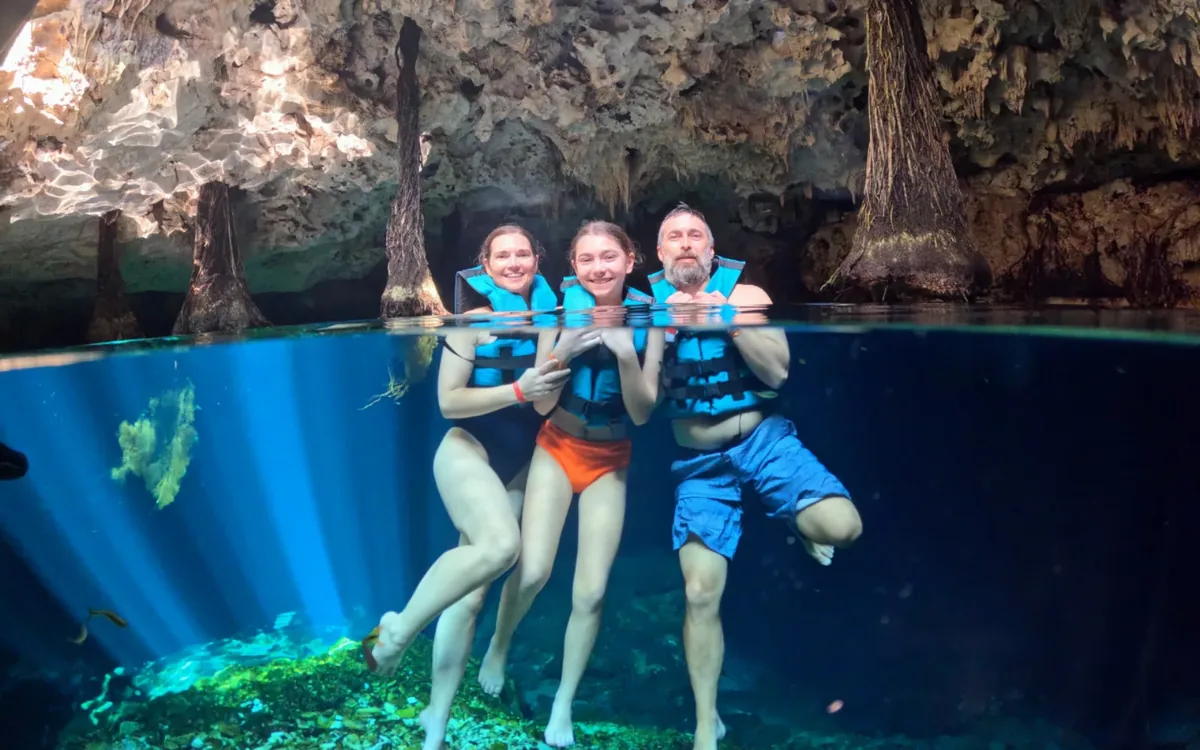
Tulum: Mayan Ruins, Swimming with Turtles, Cenote and Mexican Lunch
The same three-stop shape — ruins, Akumal turtle swim, cenote — but picked up from Riviera Maya hotels rather than run down from Cancún, with separate specialist guides for the ruins and the water sections and lunch included. Rated 5.0, though from a small base of 14 reviews. From $165, plus a $50 conservation fee per person paid in cash at pickup.
For a group that wants to set its own clock — which, given the clarity-versus-crowds trade-off above, is the one thing that genuinely improves this day — the private Tulum ruins, turtles, cenote and beach day covers the same four stops privately, from $232 per person. It rates 5.0 but from only six reviews, so treat that score as promising rather than proven and read what’s there before you commit. Our tour formats guide covers when private pricing actually beats per-person group pricing.
Doing it yourself is straightforward with a rental car, or by colectivo along Highway 307 — frequent departures, roughly 20–30 minutes between the two, for a modest fare. You’ll be dropped on the highway and walk about ten minutes down to the beach. Parking in Akumal is limited and fills early, so arrive before 9 AM regardless of which stop you’re doing first.
Self-driving doesn’t mean going unguided in the water, and it shouldn’t — the guided snorkel is bookable on its own, without transport. The Akumal turtles tour is the transport-free version: you make your own way to the meeting point, and it covers park entry, a certified guide for the turtle swim, snorkel gear, life jacket, lockers and showers, rated 4.6 from 31 reviews, from $45. Pair it with the Tulum Archaeological Zone Guided Walking Tour for the ruins leg — 1 hour 15 minutes on site with a certified guide and beach access afterward, rated 4.9 from 110 reviews, from $17 — and you’ve built the packaged day yourself, on your own schedule, for less.
Compare every Tulum ruins tour and combo →
Sargassum: What to Expect in 2026
Akumal’s open, east-facing coastline makes it more exposed to sargassum than some sheltered spots along the coast, and 2026 has been a heavy year — tracking as the second-largest on record, behind only 2025.
Here’s the reassuring part: the turtles stay in the bay and keep feeding on the seagrass regardless of what’s happening on the surface. Sargassum affects your comfort and your visibility, not the wildlife itself. Heavy mats can genuinely spoil a visit — reduced clarity, and an unpleasant smell from seaweed decomposing on the sand — but conditions shift within a day or two depending on wind and current, and cleanup crews work the beach daily.
Check a live sargassum tracker the day before and the morning of your visit. If conditions look heavy, consider one of the quieter nearby alternatives below rather than pushing through poor visibility.
What to Bring
Your own mask and snorkel, if you have them — rental gear quality varies. Reef-safe, biodegradable sunscreen, or better still a UPF rash guard, which cuts how much sunscreen you need at all. Reef-safe water shoes, since entry points can be rocky. Cash in pesos. A towel, water, and a snack.
Swimming ability isn’t a barrier. Life jackets are mandatory for everyone in the guided turtle zone, which makes this genuinely accessible to weaker swimmers and to children — being comfortable floating and breathing through a snorkel is enough.
Parking runs a modest daily or hourly fee at the lots near the entrance, cash only, and spaces disappear fast — another reason to arrive early. Beach access typically carries a small community fee as well, separate from any guided tour cost. All of these figures shift, so treat any specific number you read anywhere as a starting point and confirm on arrival.
Watch for roadside touts before you even reach the parking lot, flagging down cars and claiming a tour or a fee is compulsory. You don’t have to stop for them. Book with a recognised cooperative or an authorised guide instead, ideally in advance or at the beach entrance itself.
Is Akumal Worth It?
Genuinely, yes — with the right expectations.
Very few places on earth let you wade off a beach and be swimming alongside wild sea turtles within minutes, with no boat trip and no luck required. That’s a real and rare thing, and it’s why Akumal has the reputation it has.
The honest caveat: it’s also commercialised and it can be crowded, and traveller sentiment splits accordingly. The difference between “highlight of the trip” and “overtouristed letdown” comes down almost entirely to timing and mindset — arrive at opening, book with a legitimate guide, and treat the life jacket and the distance rules as what they are: protection for an animal that deserves it, not an inconvenience.
If it’s too crowded, or the sargassum is bad
A few quieter alternatives nearby, worth knowing about:
- Half Moon Bay, just north of the main bay — rockier, quieter, sometimes clearer.
- Yal-Ku Lagoon, a short distance away — calm, clear water with good marine life, and a separate small entry fee.
- Xcacel-Xcacelito, about ten minutes south — a protected nesting beach with its own conservation fee and a cenote nearby, though this is a shore-viewing nesting site rather than a guided in-water turtle swim.
None of those three are sold as guided products, and that’s rather the point of them — you turn up, pay the local fee, and swim. If what you actually want is a guaranteed in-water turtle encounter on a day when the bay is unusable, the other option is to go out to the reef instead of into the bay: the Tulum ruins, reef snorkel and two cenotes day takes a boat out over the Mesoamerican reef for turtles and rays rather than working the seagrass beds, from $159. It rates 5.0 from just five reviews — a very thin base, so read them all before booking rather than treating the score as settled.
Frequently Asked Questions
Do you need a guide to swim with turtles in Akumal? For the main turtle-feeding zone, effectively yes — the activity is regulated and requires an officially authorised guide. Independent near-shore wading happens in practice but isn’t an officially sanctioned activity.
How much does it cost to visit Akumal? Parking and a community beach-access fee apply, both modest and cash-only; guided turtle-snorkel tours are priced separately by the operator, from around $45 for the guided swim alone without transport. Confirm current fees on arrival, as they shift.
What’s the best time of day to see the turtles? Before 9:30 AM, when the water is clearest and the crowds haven’t arrived. Late afternoon, roughly 3 to 5 PM, is a good second option.
Are you guaranteed to see sea turtles at Akumal? Sightings are highly reliable given the resident population, but no wildlife encounter can be guaranteed. Arriving early significantly improves both your odds and your visibility.
How far is Akumal from the Tulum ruins, and how do I get there? About 25 km, a 20 to 30 minute drive north on Highway 307. A rental car or a colectivo both work well for a self-guided day.
Can you do the Tulum ruins and Akumal in one day? Yes, comfortably — it’s one of the strongest combo days in the region, whether you book a packaged tour or arrange the transport yourself.
Is Akumal affected by sargassum in 2026? Yes, more than some sheltered beaches, and 2026 has tracked as a heavy year. The turtles aren’t affected, but your visibility and comfort can be — check a live tracker before you go.
Is Akumal worth it, or is it too crowded now? Worth it, if you go early and use a legitimate guide. It is genuinely commercialised, and the difference between a great visit and a disappointing one is almost entirely about timing.
Can non-swimmers or kids do the turtle snorkel? Yes — mandatory life jackets make this accessible to weak swimmers, and many operators welcome young children.
What should I bring to Akumal? Your own snorkel gear if you have it, reef-safe sunscreen or a rash guard, water shoes, and cash in pesos for parking and beach access.
Plan Your Day
Ready to pair the ruins with the region’s best wildlife encounter? Check availability for the combined ruins, cenote and turtle-swim day in the calendar above, or build it yourself — the guided swim and the guided ruins walk are both bookable separately, and doing it that way buys you the early start that makes the difference.
Browse every Tulum ruins tour and combo →
Related: the complete Tulum ruins guide · Tulum ruins and cenote tours · tickets and entry fees · best time to visit · the Tulum + Cobá combo
Conservation rules, fees, and sargassum conditions verified September 2026. Rules around wildlife interaction are actively enforced — confirm current requirements with your guide before you enter the water. Ratings and review counts re-checked live on 7 September 2026 and will drift as new guests review.
Walk Through 800 Years of Maya History
Join guests who rated this guided walking tour 4.9/5. A certified local guide, skip-the-confusion entry, and beach access afterward — all included. Free cancellation.
Check Availability & Book