Maya Ruins of the Yucatán: Which Ones Should You Visit?
There are a dozen Maya sites within reach of the Riviera Maya. Here's an honest comparison — fees, climbing rules, crowds, and which ones actually deserve your time in 2026.
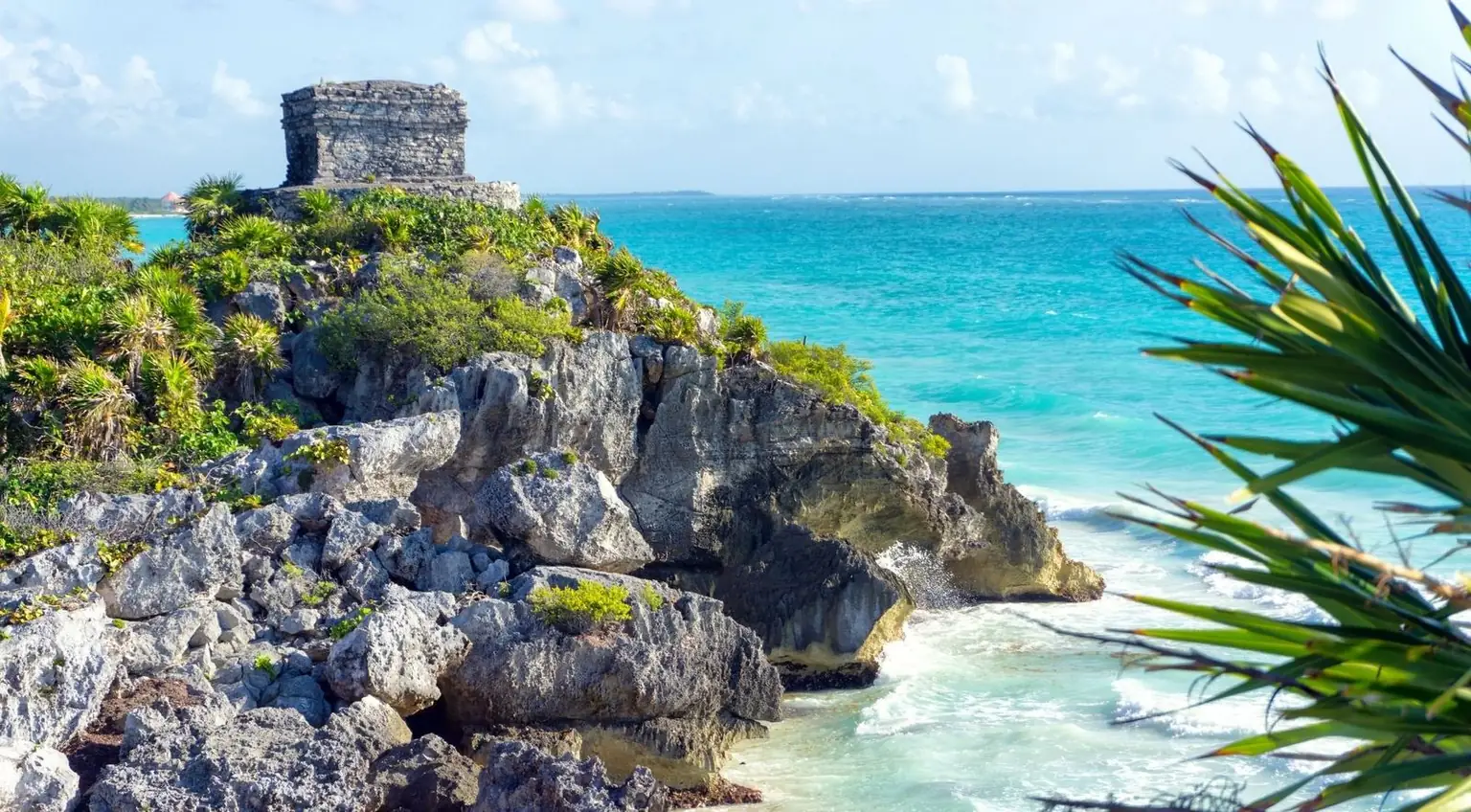
“Maya ruins” in this part of Mexico means a lot more than Chichén Itzá.
There are roughly a dozen visitable sites within reach of the Riviera Maya, each with a different scale, setting, and reason to go. Most travellers only ever hear about two of them. This is the full picture — an honest comparison to help you choose, whether you have half a day or a week.
The short version: for most first-time visitors, the real decision is among four sites — Tulum (coastal, easy), Chichén Itzá (grandeur, bucket-list), Cobá (jungle, climbable), and Ek Balam (climbable, uncrowded). Everything else is a specialist pick for extra time or a specific base. Fees moved sharply in 2026, so check current figures before you commit to any of them:
The Big Four
Tulum
The closest major site to the coast, and the only one built directly above the Caribbean. Compact — most visitors are done inside 1 to 1.5 hours — and not climbable. See our complete Tulum guide and current entry fees for the full picture, or our structure-by-structure walkthrough if you want to know what you’re actually looking at once you’re inside. If you’d rather have that explained on site, the Tulum Archaeological Zone Guided Walking Tour covers the whole precinct in 1 hour 15 minutes with a certified guide — rated 4.9 from 110 reviews, from $17. Best for: ease, coastal scenery, first-time visitors, anyone short on time.
Chichén Itzá
Mexico’s most-visited archaeological site — over 2.1 million visitors in 2025 alone — and a genuine wonder: a UNESCO World Heritage Site and one of the New7Wonders of the World. About two hours from Tulum via Highway 180D through Valladolid. Foreign entry runs roughly 697 pesos, and we cover the full comparison, including whether to combine it with a Tulum trip (short answer: don’t, on the same day), in our dedicated Tulum and Chichén Itzá guide. Best for: scale, history, the bucket-list photo.
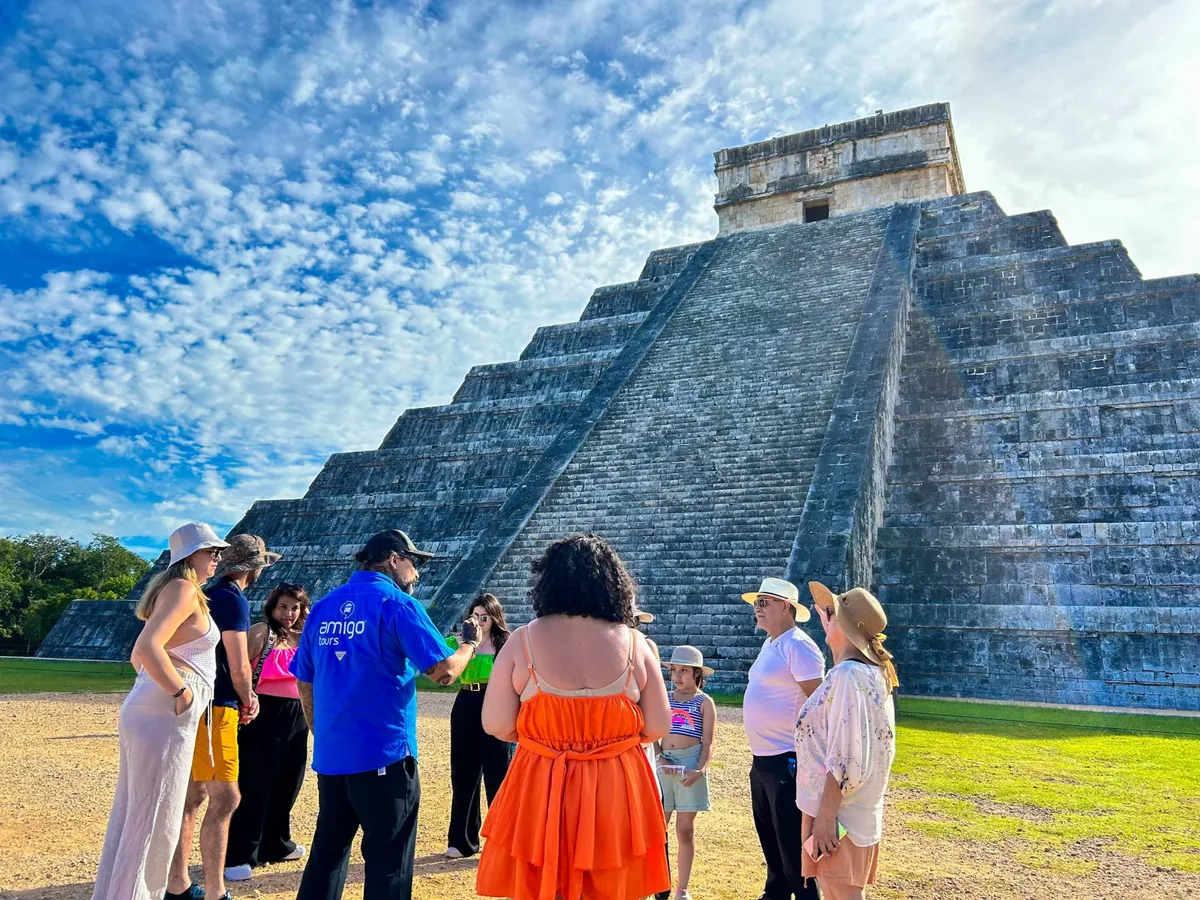
Cancún: Chichén Itzá, Cenote & Valladolid Tour with Lunch
The standard way to do Chichén Itzá from the coast — the site, a cenote swim, lunch, and the colonial streets of Valladolid, as one full day rather than an add-on. Rated 4.6 from 8,649 reviews, from $57.
Other Experiences You Might Enjoy
Two of the Big Four have no bookable tour attached to them — Cobá and Ek Balam are reached under your own steam or through a general Riviera Maya operator. What is readily bookable clusters around the coast: the Tulum ruins themselves, a cenote swim at Cenote Mariposa or the cave cenotes near Cobá, sea turtle snorkelling at Akumal, the Muyil ruins and the lagoon float through the Sian Ka’an Biosphere Reserve, and full days out to Chichén Itzá and Valladolid. Current availability and pricing for these and other Tulum-area tours are below.
The Big Four: The Two You Can Still Climb
Tulum and Chichén Itzá are the two most visitors book. These are the two you can still put your hands on — both Cobá and Ek Balam allow climbing, which is the single biggest experiential difference in this list.
Cobá
The jungle counterpart to Tulum, and — as of December 2025 — home to one of only two big climbable pyramids left in the region.
Location: about 45 minutes northwest of Tulum, making it by far the easiest major site to pair with a Tulum morning.
The climb: Nohoch Mul, at 42 metres, is the tallest pyramid in the northern Yucatán Peninsula. It reopened to climbers on 8 December 2025 after six years closed, with a new wooden staircase built over the original stone steps. Climbing runs 8:00 AM to 3:30 PM, in supervised groups of 15 with a 15-minute summit limit, and closed-toe shoes with grip are required.
The scale: Cobá is enormous — the archaeological zone spans roughly 70 square kilometres and supported an estimated 50,000 people at its peak. It’s also spread out: the walk from the entrance to Nohoch Mul is nearly 2 km, so most visitors rent a bicycle (roughly 80–100 pesos) or hire a bicycle taxi (roughly 150–200 pesos) to get around. This is a site you explore, not just tour.
Fee (verified August 2026): roughly 330 pesos total — a 210-peso INAH federal fee plus a community (ejido) fee of around 120 pesos, plus parking. Cash only.
A recent find worth knowing about: in 2024, archaeologists uncovered a “Foundation Stone” near Nohoch Mul dating the city’s founding to 569 CE. Ongoing scholarly work has since suggested the ruler named on it may have been a woman — the identification is still evolving, so treat any specific name you read as provisional.
Cenotes nearby: Cobá’s cave cenotes — Choo-Ha, Tamcach-Ha, and Multum-Ha — sit about 6.5 km from the ruins and are covered in our cenotes guide. Best for: climbing a pyramid, jungle atmosphere, pairing naturally with Tulum.
Ek Balam
The quiet alternative to Chichén Itzá, and the region’s other genuinely climbable pyramid.
Location: about 30 minutes north of Valladolid, roughly two hours from Tulum, Cancún, or Playa del Carmen — best folded into an inland Valladolid loop rather than visited on its own.
The climb: the Acropolis, around 43 metres, remains open via a rope-assisted central staircase. Steep and irregular — take it seriously.
The signature feature: an exceptionally preserved stucco facade known as Sak Xok Naah, commonly described as the “Entrance to the Underworld” — a monster-mouth doorway set above the tomb of the ruler Ukit Kan Lek Tok’, who was buried with thousands of offerings. It’s one of the best-preserved pieces of Maya stucco art anywhere.
Fee (verified August 2026): roughly 709 pesos total — 210 pesos INAH plus a 499-peso Yucatán state fee, cash only, no ATM on site. This is notably higher than older guides suggest; discard any figure below 700 pesos as outdated.
Crowds: consistently the lightest of the major sites — no in-site vendors, and a fraction of Chichén Itzá’s daily traffic. Nearby Cenote X’Canché makes a natural add-on. Best for: avoiding crowds, climbing, travellers who want depth without the Chichén Itzá circus.
Smaller and Specialist Sites
Muyil (Chunyaxché) — About 30 minutes south of Tulum, inside the Sian Ka’an Biosphere Reserve. Small, quiet, and one of the oldest documented sites in the region, with an optional lagoon boardwalk and mangrove-canal float alongside the modest ruins. About an hour for the ruins alone. A strong pick if solitude matters more to you than scale.
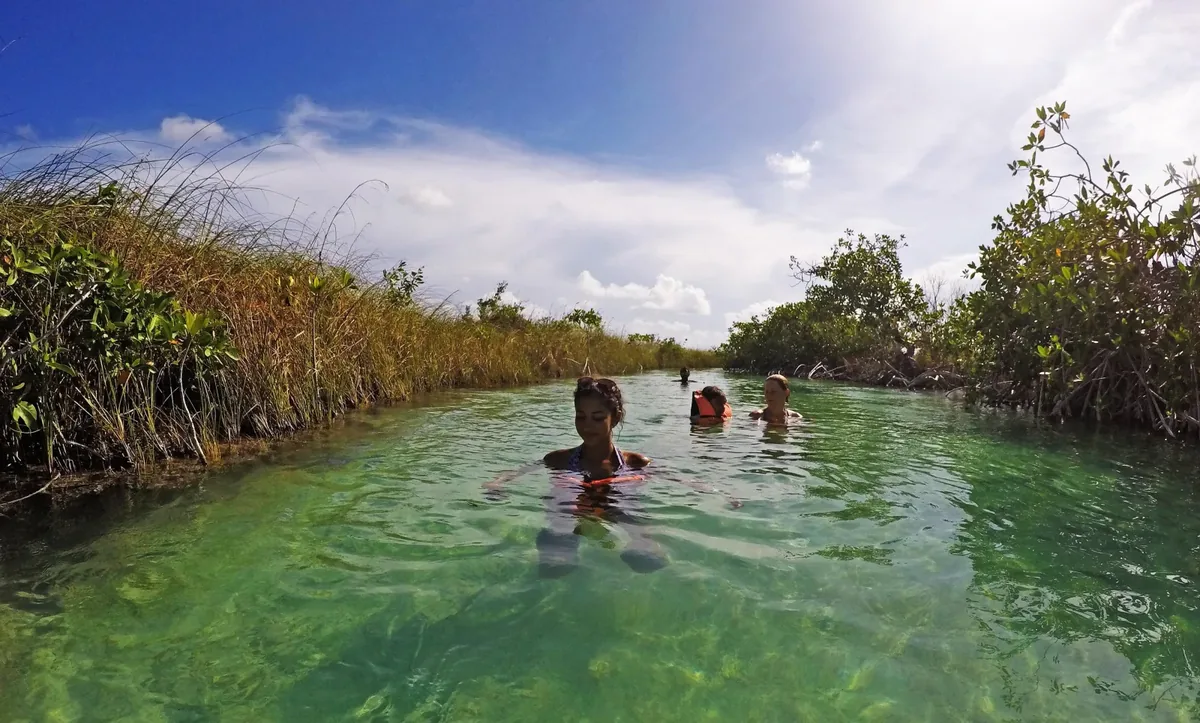
From Tulum: Muyil Ruins & Sian Ka'an Lazy River
The only one of the specialist sites on this list with a tour built around it — the Muyil ruins plus the mangrove-canal float through the Sian Ka'an reserve. Rated 4.8 from 439 reviews, from $219.
San Gervasio (Cozumel) — The largest site on Cozumel island, and the ancient sanctuary of Ixchel, the Maya goddess of the moon and fertility. Requires a ferry to reach from the mainland, so it’s naturally a Cozumel-day or cruise-passenger pick — we cover the full logistics in our Cozumel guide. Entry runs roughly $14.50–15.50 USD. Quiet, well-signed, and a genuinely good low-effort option on a cruise day when the mainland isn’t realistic.
El Rey, San Miguelito, and El Meco (Cancún) — Three small sites inside or near Cancún itself, useful if you want “Maya ruins” without leaving the city. El Rey sits in the Hotel Zone and is known for its resident iguanas. San Miguelito’s ticket includes the excellent Museo Maya de Cancún. El Meco, just north of downtown, has the tallest pyramid in the Cancún area, reopened in early 2025 after restoration. None cost more than about 90 pesos, and none need more than an hour. We touch on these in our Cancún departure guide.
Kohunlich — Far south, near Chetumal and the Costa Maya cruise port, so realistically only relevant if that’s your base. Famous for giant Early Classic stucco masks of the sun god, still remarkably preserved, in a lush palm-jungle setting. Very uncrowded — worth the detour if you happen to be in the area.
Dzibilchaltún — Just outside Mérida. Known for the Temple of the Seven Dolls and its equinox sunrise alignment (though the 2026 spring equinox event didn’t run due to resource constraints, so don’t count on it without confirming first). A Mérida-based pick, not a Riviera Maya one.
Uxmal — Also a Mérida-based day, about 80 km south of the city in the Puuc hills. A UNESCO site widely considered to rival Chichén Itzá for architectural beauty, with a fraction of the crowds and no in-site vendors. Foreign entry runs roughly 556–586 pesos. If your trip includes Mérida, don’t skip this one.
Ruins vs. Eco-Parks: A Clarification Worth Making
If you’ve searched “Mayan ruins” and landed on Xcaret, Xel-Há, or Xplor, it’s worth understanding what you’re actually looking at.
These are commercial eco-parks, not archaeological sites. Xcaret does contain a small genuine Maya site — the Polé ruins — inside its grounds, alongside underground rivers, wildlife exhibits, and cultural performances. Xel-Há is essentially a natural-inlet water park for snorkelling and cliff-jumping, with no meaningful ruins. Xplor is a pure adventure park — ziplines, amphibious vehicles — with no archaeology at all.
None of this makes them bad days out. It just means they answer a different question than “I want to see Maya ruins.” A true INAH-protected archaeological zone — Tulum, Chichén Itzá, Cobá, Ek Balam, Muyil, and the rest of this list — is a preserved ancient city with a modest government entry fee. An eco-park is a private attraction with a much higher all-inclusive ticket that may include some Maya theming alongside modern rides. Know which one you’re booking.
Comparison Table
| Site | From Tulum | Fee (foreign adult) | Climbable | Time needed | Best for |
|---|---|---|---|---|---|
| Tulum | — | ~265 pesos+ | No | 1–1.5 hrs | Ease, coastal setting |
| Chichén Itzá | ~2 hrs | ~697 pesos | No | 2–3 hrs | Grandeur, bucket-list |
| Cobá | ~45 min | ~330 pesos | Yes — Nohoch Mul | 2–3 hrs | Climbing, jungle, pairs with Tulum |
| Ek Balam | ~2 hrs | ~709 pesos | Yes — Acropolis | ~2 hrs | Climbing, avoiding crowds |
| Muyil | ~30 min | modest INAH + reserve fee | No | ~1 hr | Solitude |
| San Gervasio (Cozumel) | ferry + drive | ~$14.50–15.50 USD | No | 1–1.5 hrs | Cruise/island days |
| El Rey / San Miguelito / El Meco | ~2 hrs | ~50–90 pesos | No | 30–60 min | Quick, no-travel option |
| Kohunlich | far south | ~85–100 pesos | Partial | 2–3 hrs | Deep solitude, stucco masks |
| Dzibilchaltún | far (Mérida) | ~105 pesos | No | 1.5–2 hrs | Equinox alignment |
| Uxmal | far (Mérida) | ~556–586 pesos | Partial | 2–3 hrs | Puuc architecture, low crowds |
All fees verified August 2026. Mexico significantly raised foreign-visitor fees at federal sites in January 2026 — treat any figure from an older source as outdated, and confirm at the gate.
How to Choose
By time available
Half a day: Tulum, or Cobá, or one of the Cancún mini-sites, or San Gervasio if you’re on Cozumel.
A full day: Chichén Itzá (paired with Valladolid and a cenote), or the standout combo — Tulum plus Cobá plus a cenote, which works because the two sites are only 45 minutes apart. Compare that to Tulum and Chichén Itzá, roughly two hours apart each way, and it’s obvious which combination actually makes sense in a single day. We cover that pairing decision in detail in our Chichén Itzá comparison.
Multiple days: an inland loop based in Valladolid — Chichén Itzá, Ek Balam, and cenotes — or a Mérida extension to add Uxmal and Dzibilchaltún.
By priority
- Want to climb a pyramid? Cobá or Ek Balam — the only two real options left.
- Want maximum grandeur? Chichén Itzá.
- Want coastal beauty with minimum effort? Tulum.
- Want to avoid crowds entirely? Ek Balam, Muyil, Uxmal, or Kohunlich.
- Want ruins and a swim in one stop? Cobá’s cave cenotes, or Ek Balam’s Cenote X’Canché.
- Travelling with kids who want to climb something? Cobá — rent bikes, explore the jungle paths, then climb Nohoch Mul.
By where you’re based
Cancún: the in-city mini-sites are easiest; Chichén Itzá, Tulum, and Cobá are all realistic day trips; Ek Balam is a long day.
Playa del Carmen: the most central base of all — Tulum and Cobá are 45 minutes to 2 hours away, Chichén Itzá and Ek Balam roughly 2–2.5 hours. See our Playa del Carmen departure guide.
Tulum: the best base specifically for Cobá (45 minutes) and Muyil (30 minutes).
Cozumel: San Gervasio on the island itself; the mainland sites require an 8-hour-plus port day and careful planning — see our Cozumel guide.
An Honest Take on Crowds and Authenticity
Worth saying plainly, since it affects which sites are actually enjoyable to visit:
Chichén Itzá delivers unmatched scale but is also the most commercialised of the major sites — expect heavy tour-bus traffic and a dense corridor of vendors. It’s worth seeing once, ideally at opening.
Tulum has no in-site vendors and a spectacular setting, but gets genuinely busy by mid-morning and during cruise-ship hours.
Cobá feels immersive and jungle-quiet, though expect visitor numbers to climb now that Nohoch Mul is climbable again.
Ek Balam is the consistent favourite among travellers who’ve done both it and Chichén Itzá — quiet, vendor-free, and just as climbable.
Muyil, Kohunlich, Uxmal, and San Gervasio are all genuinely uncrowded, if you’re willing to go a little further off the main circuit.
Frequently Asked Questions
Which Maya ruins should I visit if I only have one day? Tulum if ease and setting matter most; Cobá if you want to climb a pyramid; Chichén Itzá if the bucket-list wonder is the priority. Tulum plus Cobá together also fits comfortably in one day, since they’re only 45 minutes apart.
Can I still climb a pyramid in the Yucatán? Yes — Cobá’s Nohoch Mul (reopened December 2025) and Ek Balam’s Acropolis are the two options. Chichén Itzá and Tulum have both been closed to climbing for years.
What’s the difference between Mayan ruins and places like Xcaret or Xel-Há? Xcaret, Xel-Há, and Xplor are commercial eco-parks, not archaeological sites — Xcaret contains one small genuine ruin, but these are fundamentally different experiences from a government-protected Maya city like Tulum or Chichén Itzá.
Is Cobá or Ek Balam better if I want to avoid crowds? Ek Balam is quieter overall and has no in-site vendors. Cobá is large enough to absorb crowds well, though numbers are rising since its pyramid reopened to climbers.
Are there Maya ruins I can visit without leaving Cancún? Yes — El Rey, San Miguelito, and El Meco are all small sites in or near Cancún itself, each under an hour to visit and costing under 100 pesos.
Is Uxmal worth visiting instead of Chichén Itzá? If you’re based near Mérida, many travellers rate Uxmal’s architecture as comparable or superior, with far fewer crowds. It’s not a realistic same-day pairing with Tulum, though — it’s its own trip.
How much do Maya ruins entry fees cost in 2026? Foreign-visitor fees rose significantly at federal sites in January 2026. Expect roughly 265–330 pesos at the smaller sites (Tulum, Cobá), up to 700 pesos at the larger ones (Chichén Itzá, Ek Balam). Confirm current fees before you travel.
Booking
Ready to start with the site that’s easiest to reach and pairs naturally with everything else on this list?
Check availability for the Tulum ruins and cenote day above, or see the complete Tulum ruins tours guide for every tour type and departure point — and our format comparison if you’re weighing a private guide against a group departure.
Related: the complete Tulum ruins guide · inside the Tulum Archaeological Zone · Tulum and Chichén Itzá — should you combine them? · Tulum vs Chichén Itzá, compared · Tulum ruins and cenote tours · Tulum ruins tickets and entry fees
Entry fees verified August 2026. Mexico raised foreign-visitor fees significantly at federal archaeological sites in January 2026 — confirm current rates before you travel. Ratings and review counts re-checked live on 25 August 2026 and will drift as new guests review.
Walk Through 800 Years of Maya History
Join guests who rated this guided walking tour 4.9/5. A certified local guide, skip-the-confusion entry, and beach access afterward — all included. Free cancellation.
Check Availability & Book