Is Tulum Safe? A Practical Guide for Visitors
Is Tulum safe right now? Current advisories, what the 2026 crime figures show, health and hurricane conditions, and the scams to avoid, with practical steps.
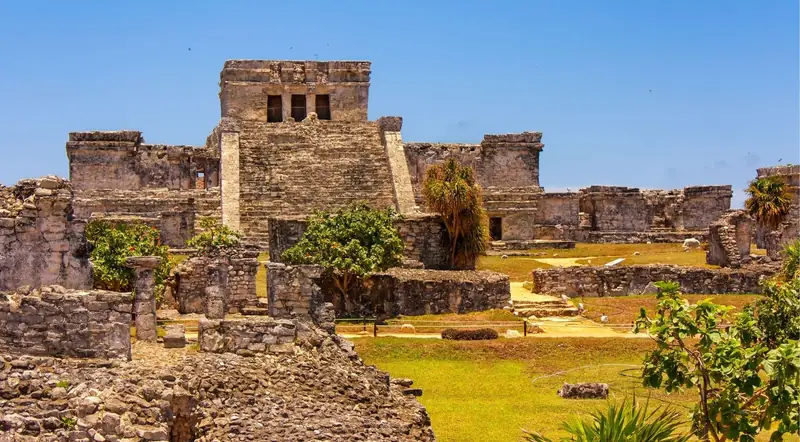
Yes, Tulum is safe for the great majority of visitors who take the same sensible precautions they would in any busy international beach destination. A visit to the archaeological ruins is about as low-risk as travel gets: a daytime, heavily trafficked, well-staffed activity.
The state that contains Tulum, Cancún, Playa del Carmen and Cozumel sits at the same US travel advisory tier as France, Italy, Germany and the UK. The practical risks a tourist faces here are mostly scams, overcharging, road and water hazards and a few planning traps. Violence is real but aimed at specific local people, and it rarely reaches a visitor’s day. This guide, updated on 20 September 2026, walks through how to avoid each risk. If you’d rather have tickets, transport and a guide sorted before you arrive, the guided walk below includes the entrance fee in its standard option and meets you across the road from the gate, which sidesteps the ticket-window scam covered further down:
The Short Version
Quintana Roo, the state containing every destination in this cluster, is rated Level 2, “Exercise Increased Caution,” by the US State Department, with the most recent revision reported in late May 2026. Neither the UK Foreign Office nor the Canadian government advises against travel to any part of the state, and both updated their guidance in September 2026. All three ask for extra alertness after dark. The UK is the most specific: it names Tulum, Cancún and Playa del Carmen and asks for particular caution in their downtown areas at night.
The risks that affect visitors are taxi overcharging, the parking-lot ticket scam at the ruins, cash demands at police stops, ATM skimming, timeshare pressure, heat exhaustion at a shadeless archaeological site, scooters and ATVs on the road and an unguarded coastline. This year adds a few planning traps: stomach illness linked to some resort hotels, a hotel that has closed or been sealed without notice, and a thin flight schedule at Tulum airport. Every one of these is preventable.
Violent crime is real in Quintana Roo. It is concentrated in the retail drug trade and largely unrelated to how tourists spend their days. Official figures show homicides falling sharply in 2026, though not to zero. The single highest-leverage safety decision any visitor can make is to stay out of the drug scene entirely and use arranged transport after dark.
As of 20 September 2026 the Atlantic hurricane season has been unusually quiet, with no hurricane so far and no storm expected near the Caribbean in the coming week. The season runs to 30 November, so the insurance advice below still applies.
Other Experiences You Might Enjoy
Once safety is settled, Tulum makes a good base for a wider trip. The sea turtles of Akumal, the climbable jungle pyramid at Cobá, the freshwater cenotes along the Cobá road, the Muyil ruins and the lazy-river float through the Sian Ka’an Biosphere Reserve, and the long day inland to Chichén Itzá and colonial Valladolid are all day trips from a Tulum or Riviera Maya base. Current availability and pricing for these and other experiences along this stretch of coast are below.
What the Official Advisories Say
United States. The State Department’s current Mexico advisory places Quintana Roo at Level 2, Exercise Increased Caution, citing crime risk and the newer blanket “terrorism” language now applied across Mexico following certain cartels’ designation as Foreign Terrorist Organizations. That is a legal classification change and no signal of a new bomb-threat risk in Tulum specifically. The advisory’s practical guidance is to pay attention to your surroundings after dark and stay on well-lit pedestrian streets and in tourist zones.
For context, Level 2 is the same tier applied to France, Italy, Germany, Spain and the United Kingdom, destinations most travellers book without a second thought. It sits one step above the “normal precautions” level applied to neighbouring Yucatán state, and nowhere near Level 3 (“Reconsider Travel”) or Level 4 (“Do Not Travel”), which cover a handful of mainland states (Colima, Guerrero, Michoacán, Sinaloa, Tamaulipas and Zacatecas), none of them near the Yucatán Peninsula.
United Kingdom. The Foreign, Commonwealth & Development Office applies no “essential travel only” warning to any part of Quintana Roo. Its guidance, updated on 11 September 2026, asks travellers to be very cautious after dark in the downtown areas of Cancún, Tulum and Playa del Carmen, and says British travellers have been physically and sexually assaulted in these places. It also notes that rival gangs have occasionally clashed near tourist destinations, that these incidents haven’t targeted tourists directly, but that anyone nearby could be affected. Hence the standard advice to be cautious after dark and stay in well-lit, populated areas.
Canada. Canada maintains a nationwide “exercise a high degree of caution” for Mexico as a whole, reflecting the country’s overall crime statistics, and updated its guidance on 17 September 2026. It carries no separate regional advisory for Quintana Roo, and the Riviera Maya remains one of the most-visited destinations for Canadian travellers.
What none of this means: no government singles out the ruins or the beach zone for warnings, and none advises against visiting. The main thing to take from them is the after-dark caution, downtown Tulum included. Advisory levels change, so check your own government’s travel site in the weeks before you fly.
Is the Ruins Visit Itself Safe?
Yes, and more so than almost anything else you’ll do on a Tulum trip. You’re visiting in daylight, alongside hundreds of other tourists, on a well-managed federal site with staff present throughout. The practical risks here are the ones covered in our family safety guide and best-time guide: uneven limestone terrain, cliff edges and heat. Crime isn’t on that list. Since late April 2026 there have also been metal-detector arches and National Guard staff at the entrance, added after a shooting at the Teotihuacán site near Mexico City. That shooting is sometimes reported as if it happened at Tulum. It did not, and Teotihuacán is about 1,200 km away.
Tulum’s Crime Numbers, Honestly
Tulum’s municipal homicide rate has, in recent years, ranked among the higher figures nationally in Mexico. One analysis of federal data for the twelve months to May 2026 put it at about 46 per 100,000 residents, against about 8 in Cancún and 7 to 8 in Playa del Carmen. It helps to understand what that statistic measures and what it doesn’t.
That number is driven almost entirely by turf disputes within the retail drug trade, measured against Tulum’s relatively small resident population. The count was 26 killings in that year, about a third of Cancún’s, but the town has roughly 57,000 registered residents and hosts millions of visitors, which makes the per-capita rate look worse than the actual risk to the tourists who pass through each year. Analysts and local authorities consistently note that tourists are rarely the intended targets of this violence.
The trend is sharply positive. The federal security office reported in July that Quintana Roo’s homicides had fallen by about 85% between September 2024 and June 2026, and by about 60% across the first eight months of 2026 compared with 2025. Tulum came off the federal priority-municipality list in February and recorded no homicides in May, June or July. That run has ended: local press reported killings in Tulum in August and again on 18 September. The state has also been investing visibly in security infrastructure across its tourist corridors, including a National Guard base beside the airport.
One caution about the numbers themselves. A Riviera Maya News analysis published in April argues that thousands of violent deaths in the state were logged under catch-all categories, which would flatter the official totals, and neither the state nor the federal office has answered it. Treat the direction of travel as good and the exact percentages as approximate.
Two figures that circulate are out of date. The claim that gang crime in Tulum rose 488% “in the last year” traces to a 2023 article about 2022. The claim that Tulum has had no homicides for months was accurate for May to July 2026 and no longer is.
Where violence does reach visitors. The attacks reported in Tulum this year were aimed at specific people, mostly local staff, workers or people in the drug trade. They cluster in the small hours, roughly 2am to 6am, at the edges of nightlife venues: access roads, car parks and the street outside, not the dance floor. That pattern is why the advice is to be back at your hotel by about one in the morning and to arrange your ride before you go out.
Foreign visitors have, rarely, been caught up in this violence. There have been documented incidents in recent years where tourists were injured or killed in shootings connected to disputes between people in the drug trade, and none where tourists were themselves the targets. These events are rare set against the tens of millions of visitors the region receives, but you deserve the factual record without either alarm or false reassurance. The pattern across every documented case is consistent: proximity to the drug scene, not tourist activity, was the common thread.
How the February 2026 unrest played out here: the killing of a major cartel figure in a mainland state set off retaliatory violence across much of Mexico, and Quintana Roo was touched briefly. In Tulum two convenience stores and several vehicles were set alight, and the US Embassy issued a shelter-in-place alert naming Cancún, Cozumel, Playa del Carmen and Tulum. It was lifted within about a day, no tourist was reported hurt, the state’s advisory level didn’t change, and the airports stayed open. The same weekend brought hundreds of false or AI-generated posts about Mexico, including fake airport attacks and invented stories of tourists held hostage. If a frightening post appears, check it against your embassy’s alerts and local news before changing plans.
The Scams That Target Tourists
This is where your practical risk lives, and a little preparation goes a long way.
The ruins parking-lot ticket scam
Unofficial vendors work the parking area near the ruins, flagging down cars and claiming the official ticket counter is closed or broken, then selling inflated bundle packages. It isn’t true, and the official counters operate normally. Walk past anyone flagging you down in the parking lot and head straight to the marked entrance booths; our ticketing guide has the current entry fees. The fake versions have grown more elaborate: desks in matching blue shirts calling themselves “Información Turística de Tulum” sell bundles at US$85 or more per person, when a foreign adult pays 265 pesos at the gate. If anyone quotes you a price well above the official rate, you’re at an unofficial booth. A guided tour that includes the entrance fee removes the question altogether: the Tulum Archaeological Zone Guided Walking Tour is rated 4.9 from 110 reviews, from $17, and a cheaper option leaves you to buy tickets yourself, so check which one you’re selecting.
Taxi overcharging
This is the single most common complaint from visitors to the region. It happens often at the Cancún airport and around town, since taxis here don’t use meters. Uber and DiDi are legal across the state but are effectively kept out of Tulum by the taxi union, so there is no app fare to compare against. Typical prices this year are about 100 pesos within town, 300 or more from town to the beach zone, and US$65 to 95 for a transfer from Tulum airport. A fare-regulation plan announced in July 2026 promises posted tariff cards, but they are not yet in every cab. The Tren Maya has also had frequent technical delays in 2026, and a taxi from either Tulum station costs 100 to 300 pesos. Always agree the fare in pesos before you get in the car, use the official pre-paid taxi counters at the airport and turn down drivers who approach you inside the terminal, or pre-book a private transfer entirely. Our Cancún and Playa del Carmen departure guides cover both. If you’d rather not negotiate at all, a tour with pickup takes the fare out of your hands: the Tulum ruins, Cenote Mariposa and Playa del Carmen day from Cancún includes hotel pickup from the Cancún area and is rated 4.6 from 457 reviews, from $34 plus a $40 fee per adult paid in cash on the day.
ATM skimming and currency conversion tricks
Standalone street ATMs, as opposed to machines inside major banks, have a documented history of card skimming in this region. Use ATMs only inside recognised banks or major supermarkets, cover the keypad, and check for anything loose or unusual around the card slot. Separately, when a card terminal offers to charge you in your home currency instead of pesos, decline it. That “convenience” is a poor exchange rate working against you, covered in more detail in our cost breakdown guide.
Police stops and cash demands
Local police have been a source of visitor complaints as well as protection. Tourists driving rental cars have reported officers demanding payment at the roadside, sometimes through a handheld card reader: about US$1,100 was taken from two US visitors in 2025, filmed cash demands followed in early 2026, and British visitors were reportedly made to transfer 21,000 pesos after a breathalyser reading below the legal limit. Municipal authorities dismissed eight police officers for corruption between January and July 2026, so the problem is acknowledged. If you are stopped, stay polite, ask for the written infraction and say you will pay at the municipal office, and never hand over a card PIN. The simplest protection is not to drive after drinking, since checkpoints are strictest on weekend nights.
Fake official sites
Quintana Roo charges visitors a tax called Visitax, and it is paid only on the government’s own site. Look-alike sites charge several times the official fee and can appear above it in search ads, so type the address yourself (visitax.gob.mx) and check that you are on it before you pay.
Timeshare pressure
Aggressive timeshare sales tactics operate around the airport and along tourist strips, sometimes disguised as a friendly local offering a free breakfast or a “quick” presentation. Decline unsolicited offers of free trips, meals or gifts tied to a sales pitch, and never hand over your passport or card for one.
Restaurant and card tricks
Two patterns to watch for: a server adding a tip to the card machine without asking, and a “mandatory service charge” quietly appended to your bill. Check every bill line by line, and where possible keep your card in sight and don’t let it disappear to a back terminal.
Rental car scams
Reported patterns include disputes over a “missing” spare tire at return, claims of pre-existing damage that wasn’t there, and being charged in the wrong currency. Photograph the entire vehicle at pickup, including the spare tire, and note any existing damage on the paperwork before you drive off.
If something does happen
Stay calm, decline firmly, and walk away where you can. For anything serious, Mexico’s national emergency number is 911, and there’s also a free, multilingual tourist assistance line at 078. Your hotel or tour operator can usually help you make a formal complaint if needed.
Beyond Scams: Practical Safety Basics
Heat is the real risk at the ruins, not crime. The site has almost no shade, and heat exhaustion is a genuine concern; our seasonal guide covers this in depth. Arrive at the 8 AM opening, carry plenty of water, and know the warning signs: heavy sweating, dizziness and nausea mean it’s time to find shade and cool down immediately.
Highway 307 is straightforward to drive by day in a car, but avoid it after dark. Unlit stretches, unmarked speed bumps and patchy cell coverage south of Tulum make night driving riskier than day driving here, a point our departure guides cover further. It is also where most of the region’s serious injuries happen: Quintana Roo recorded 71 road deaths in 2025, and motorcyclists were 43.7% of them. A rented scooter, motorbike or ATV is the most dangerous thing most visitors will do here, well ahead of anything in the crime section above. If you ride one, wear a helmet and don’t ride at night or after drinking.
Nighttime safety varies by area. The main beach road stays busy and well-populated into the evening for much of its length, while stretches further out get quieter and less lit. Gated developments like Aldea Zamá offer round-the-clock security. The most practical rule is to use arranged transport after dark and skip walking isolated stretches alone. The nightlife strip is where the small-hours attacks described above have happened, so end the night by about one and book the ride home before you leave, because there is no app to summon one.
Solo travel, including solo female travel, is common here and generally goes smoothly with the same precautions you’d apply anywhere: don’t leave a drink unattended, let someone know your plans, and stick to well-lit, populated areas after dark. The UK guidance is direct that assaults on British travellers, sexual assaults included, have happened in downtown areas at night, and it warns of drink spiking followed by robbery. With no ride-hailing apps, a late-night journey home leaves no trip record, so arrange transport through your hotel or a driver you already know. Thousands of solo travellers visit Tulum every year without incident.
Drugs are the one line to decline. Buying them is what connects visitors to the trade behind the violence, and possession carries heavy penalties for foreigners. Leave vapes at home as well, since Mexico now bans importing them.
The Water: Sea, Cenotes and Crocodiles
The sea. Tulum faces the open Caribbean with no continuous protective reef. It has no lifeguard service, no flag system and no published incident log. Cancún reports rip-current rescues and Tulum reports none, which says who is counting, not which beach is safer. Swim in the morning, where other people are, never after drinking, and if a current pulls you out, swim parallel to the shore, not back against it.
Sargassum. 2026 is a record year, with nearly 18,000 tonnes cleared from Tulum’s beaches by mid-September. The season started about three months early and peaked in June and July, and beaches began clearing in mid-September. For a visitor it is mostly a nuisance and a smell, though rotting seaweed gives off hydrogen sulfide, and a study of Quintana Roo cleanup crews found readings above 1 ppm in nearly half of their measurements. Check a live sargassum map the morning you go instead of trusting a hotel photograph.
Cenotes. Studies of the Tulum aquifer have found faecal contamination, linked to septic systems and to the many homes not connected to sewers. Keep your mouth closed while swimming, stay out for a day after heavy rain, and follow each cenote’s rinse and sunscreen rules.
Crocodiles. In May 2026 a Morelet’s crocodile bit a 75-year-old French visitor at Casa Cenote after people reportedly threw stones at it. The municipality announced rules on swimming near crocodiles, but by September they were recommendations, not law, and there was still no barrier at the site. Stay out of water where crocodiles live, never throw anything at one, and treat posted warnings as binding.
Health, Insurance and Emergencies
Stomach illness. UK health authorities reported 67 lab-confirmed cases of cyclosporiasis in travellers between 30 April and 15 July 2026, against an annual average of 93 in 2022 to 2025. Of the 51 cases with travel history, 48 had been to Mexico, staying at unconnected Cancún and Riviera Maya hotels. Mexican authorities inspected 16 hotels across four municipalities, Tulum among them, and had not published results when this page was updated. The parasite travels on fresh produce such as herbs and salad, so favour cooked food and fruit you peel yourself, and see a doctor if diarrhoea lasts more than a few days.
Dengue. Quintana Roo had 265 confirmed cases by 7 September against 140 in the same period of 2025, and two deaths. Tulum was still classed as low-transmission in July reporting, with most cases further south and inland. Use repellent in the morning and late afternoon, and if you develop a fever, see a doctor and avoid ibuprofen and aspirin until dengue is ruled out.
Alcohol. The UK Foreign Office lists Mexico in its warnings about methanol-tainted drinks. No Tulum venue has been linked to a poisoning, but drink from sealed bottles at licensed venues and avoid unlabelled buckets and homemade mixes.
Medical care and insurance. Tulum has one private hospital that stabilises patients and transfers them, and no hyperbaric chamber for divers, so the nearest are in Playa del Carmen and Cozumel. Private hospitals in the region have been reported demanding large deposits before treatment, and an air ambulance home costs US$25,000 to 100,000 and will not launch without an insurer’s guarantee of payment. Buy travel insurance when you pay your first deposit and check three clauses: the medical evacuation limit, the hazardous-activities list if you will dive cenotes or ride ATVs, and the terrorism exclusion, which some policies define by reference to US-designated groups, a list that has included Mexican cartels since 2025.
Hurricane Season and Late-September Weather
Hurricane season runs from 1 June to 30 November, and September and October are normally its peak. 2026 is running against type. Under a strong El Niño the Atlantic had produced six named storms and no hurricane by 20 September, later than in any year since satellite records began, and the US National Hurricane Center expected no new storm to form anywhere in the basin over the following seven days. Late September is otherwise hot and wet, with afternoon thunderstorms, lightning and power cuts that take card machines down with them, so carry some cash.
If a storm does threaten, Quintana Roo’s civil protection system works on a colour-coded alert ladder, opens shelters (Tulum has 38) and can evacuate people, foreign visitors included. The state’s promised phone alert system was not yet running in July, so follow the National Hurricane Center and your hotel. Travel insurance covers only a storm that had not been named when you bought the policy, so buy early.
Booking Checks: Hotels and Flights
Hotels. On 26 June 2026 prosecutors sealed two operating hotels inside Parque del Jaguar at about 5:30am and sent the guards away, and beach-road guests were evicted mid-stay in mass clearances in 2016 and 2023. Coastal occupancy fell to about 15% in August, the lowest on record, and some places have closed without announcing it. Before you pay, book by card with free cancellation, not by bank transfer or a WhatsApp deposit. Ask for the property’s tourism registration number (RNT) and look it up on Mexico’s federal tourism registry (rnt-consulta.sectur.gob.mx). Message the property the week before you fly to ask whether it is open and whether any legal process affects it, and look for a guest photo from the last month. Rooms in Tulum town cost less than on the beach road, and the documented seizures have been on the coastal strip or inside the park.
Flights. Tulum airport has lost most of its international routes. Four US routes remain (Atlanta, Dallas-Fort Worth, Houston and Miami) against twelve in 2024, with about three international departures a day, and several Canadian routes return from late October. A cancelled flight often means no next flight, so consider flying into Cancún and taking the two-hour ADO coach, which costs US$7 to 27, and never plan a same-day onward connection out of Tulum.
Frequently Asked Questions
Is Tulum safe to visit right now? Yes, for the great majority of visitors who take normal precautions. As of 20 September 2026 the region sits at the same US advisory tier as popular destinations like France and Italy, official homicide figures for Quintana Roo are down about 60% this year, and the hurricane season has been unusually quiet. The risk that remains sits in nightlife after about 1am, on scooters and ATVs, and in planning details such as hotel checks and insurance.
Is it safe to visit the Tulum ruins specifically? Very much so. It’s a daytime, well-staffed, heavily visited federal site with metal-detector arches and National Guard staff at the entrance, and the practical risks there are heat and uneven terrain, not crime.
What’s the current travel advisory for Tulum? Level 2, “Exercise Increased Caution,” from the US State Department. Neither the UK nor Canada advises against travel to the region, and the UK asks for particular caution after dark in downtown Tulum, Cancún and Playa del Carmen.
Is Tulum safe for solo female travellers? Generally yes, with the same common-sense precautions you’d take in any destination: avoid walking alone late at night, watch your drink, and arrange transport after dark, since there is no ride-hailing app to track a journey home.
What are the most common scams in Tulum? Taxi overcharging, the parking-lot ticket scam and fake “tourist information” desks at the ruins, cash demands at police stops, look-alike Visitax sites, ATM skimming and timeshare pressure are the ones to watch for, and all are preventable with the steps above.
Is it safe to drive from Cancún to Tulum? Yes during the day, in a car. Avoid driving Highway 307 after dark, when unlit stretches and unmarked speed bumps make it riskier, and don’t rent a scooter or ATV, since motorcyclists are the largest share of road deaths in the state.
Is Tulum safe from cartel violence? The region’s more serious violence is tied to the drug trade and aimed at specific people, mostly away from tourist activity, and this year’s attacks have clustered between roughly 2am and 6am at the edges of nightlife venues. It isn’t zero risk, but it rarely touches a typical visitor’s day.
What should I do if I’m scammed in Tulum? Decline and walk away where you can. For anything serious, call 911, or the tourist assistance line at 078.
Is Tulum safe at night? The main tourist areas stay reasonably busy into the evening, but use arranged transport after dark, avoid walking isolated stretches alone, and plan to be back at your hotel by about one in the morning.
Is Tulum safe during hurricane season? Hurricane season runs to 30 November, but 2026 has produced no hurricane as of 20 September and none was forecast for the following week. Buy travel insurance before any storm is named, because cover applies only to storms named after you buy.
Can I use Uber in Tulum? In practice, no. Uber and DiDi are legal across Quintana Roo but the taxi union keeps them out of Tulum, so agree taxi fares before you get in or pre-book a transfer.
Is it safe to swim in the sea and the cenotes? Take care. Tulum has no lifeguard service or flag system, so swim in the morning where others are, and keep your mouth closed in cenotes, where faecal contamination has been found. Stay out of water where crocodiles live.
Is it safe to book a beach-road hotel? Usually, but check first. Prosecutors sealed two operating hotels in Parque del Jaguar in June 2026 and occupancy hit about 15% in August, so book with free cancellation, verify the property’s RNT registration number and confirm it is open before you fly.
Plan With Confidence
The precautions that matter here are simple, specific and easy to follow, and once you know them there’s little reason for safety concerns to shape your Tulum plans. Check dates and start times for the guided walk in the calendar above, or compare every guided option before you choose.
Related: The complete Tulum ruins guide · Tulum ruins tickets and entry fees · Best time to visit · Visiting with kids
Updated 20 September 2026. UK and Canadian advisory wording was read from the governments’ own pages that day; the US State Department page could not be reached, so the US level and its late-May 2026 revision date come from secondary reporting. Crime figures come from Mexico’s federal security office as reported in the Mexican and English-language press, and some are disputed, as noted above. Hurricane, dengue and sargassum conditions change daily, so confirm current advisories at your government’s official travel site before you go. Ratings and review counts were re-checked live on 19 September 2026 and will drift as new guests review.
Walk Through 800 Years of Maya History
Join guests who rated this guided walking tour 4.9/5. A certified local guide, skip-the-confusion entry, and beach access afterward — all included. Free cancellation.
Check Availability & Book