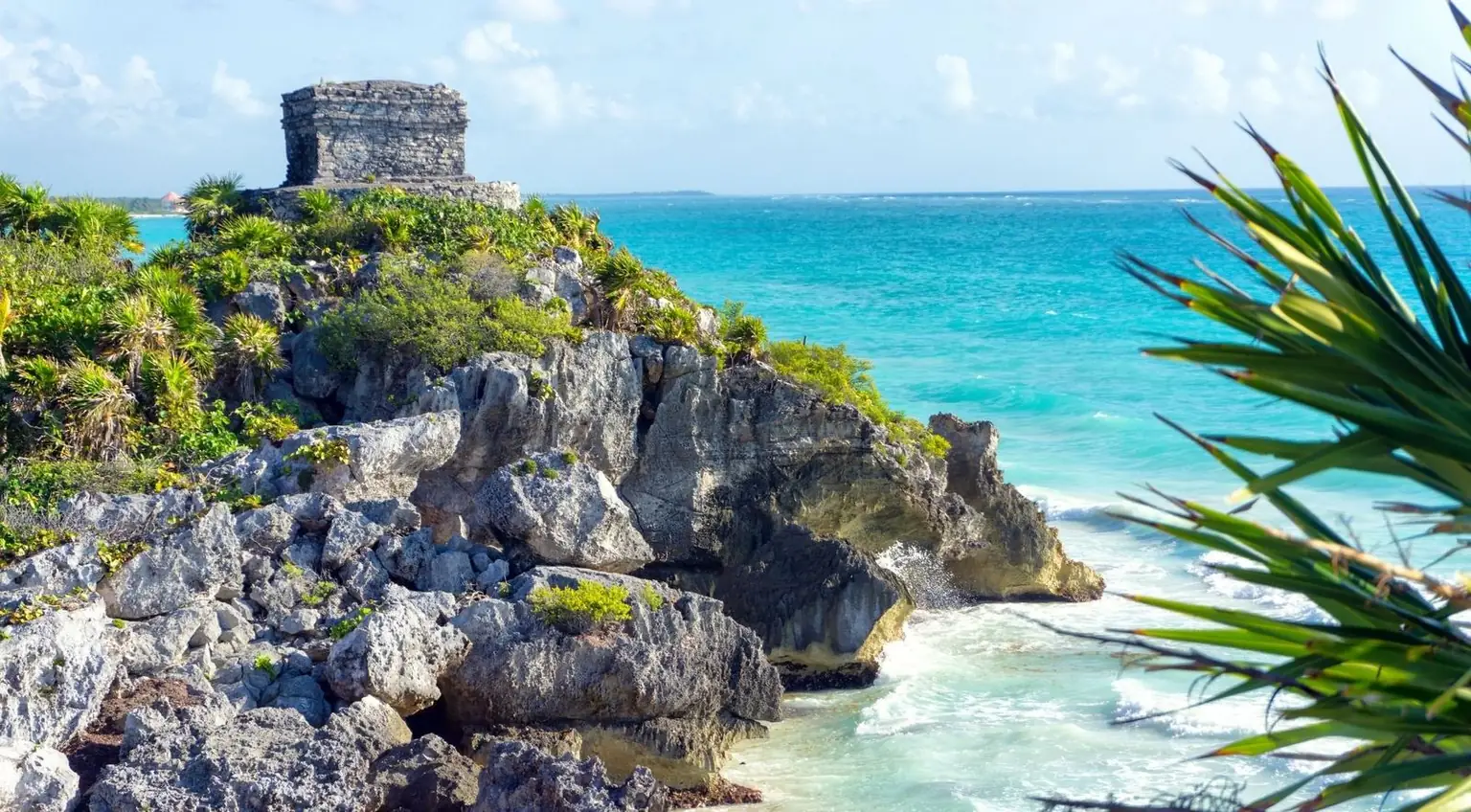
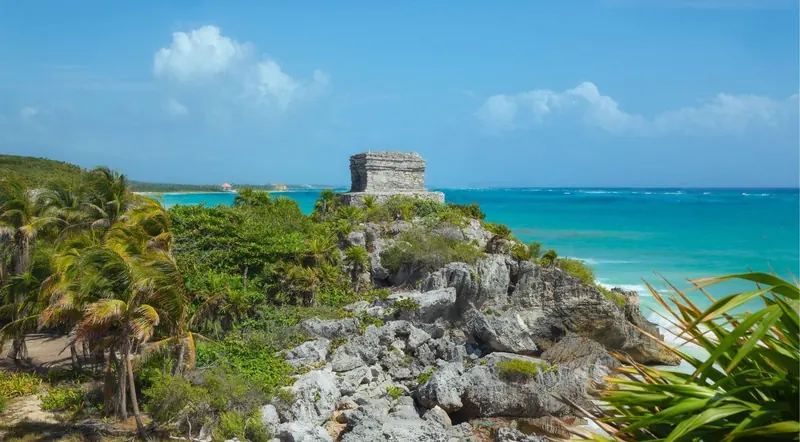
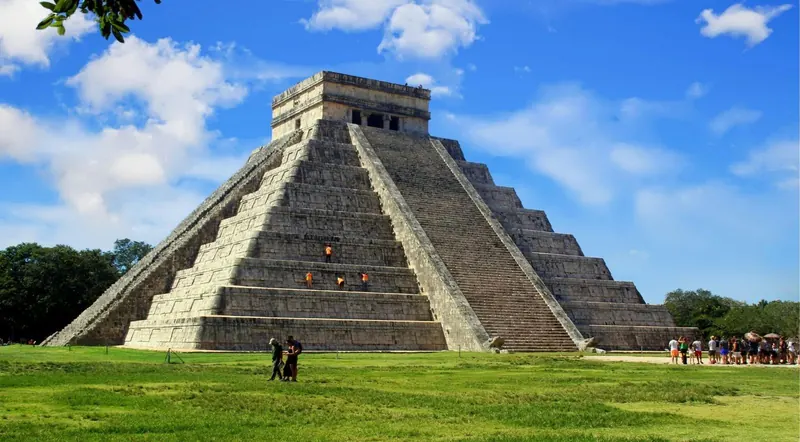
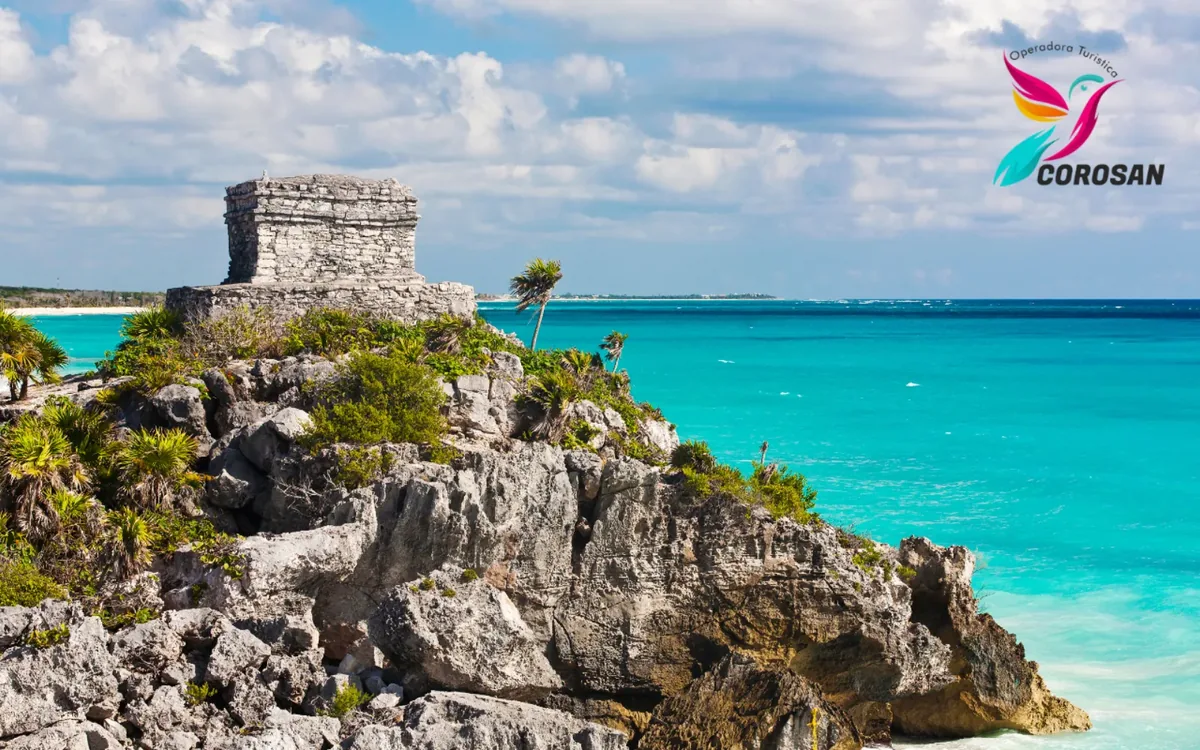
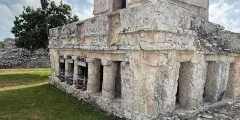
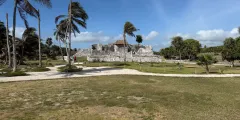
Most travelers who search for a Tulum ruins tour already have Chichén Itzá’s giant step pyramid in mind — and are surprised to learn Tulum’s ruins are a completely different kind of site. There’s no towering pyramid here. Instead, the Tulum Archaeological Zone is the only major Maya city built directly on the Caribbean coastline: a walled seaport perched on limestone cliffs, with turquoise water crashing against the rock below. It’s smaller and more compact than Chichén Itzá or Cobá, which is exactly what makes it possible to see properly in about an hour — and why it pairs so easily with a beach afternoon or a cenote swim. If you’re hoping to fit both Maya sites into one trip, our guide to combining Tulum and Chichén Itzá explains why that’s a two-day plan rather than a single long day.
What the Tulum Archaeological Zone Actually Is
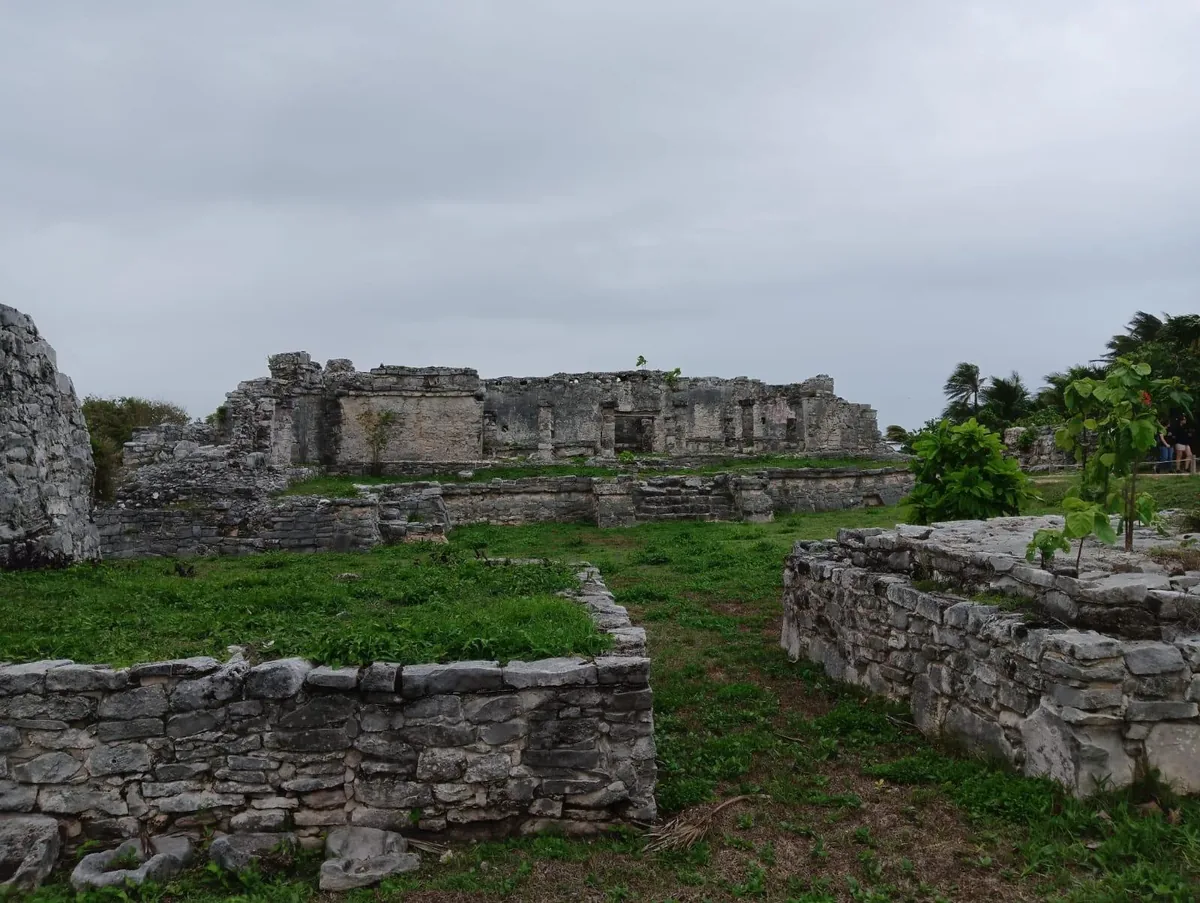
Long before it was called Tulum, the Maya knew this walled city as Zama — “City of Dawn” — a fitting name for a settlement that faces due east, greeting the sunrise over open water. The name “Tulum,” Yucatec Maya for “wall” or “fence,” was applied later by explorers describing the site’s most unusual feature: a defensive limestone wall enclosing the city on three sides, with the fourth left open to the sea cliff itself.
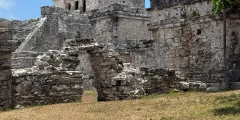
Tulum reached its peak in the Late Postclassic period, roughly 1200 to 1550 CE — making it one of the last great Maya cities still thriving when Spanish ships first appeared off this coast in the early 1500s. Unlike the older inland cities of the Yucatán — Chichén Itzá, Cobá, Ek Balam and the rest, compared in our guide to the region’s Maya sites — Tulum wasn’t primarily a ceremonial or political capital. It was a working seaport, a node in a trade network that moved jade, obsidian, turquoise, and cacao along the coastline by canoe. That practical, maritime character shows in the architecture: squat, thick-walled structures built to withstand sea wind rather than soar skyward.
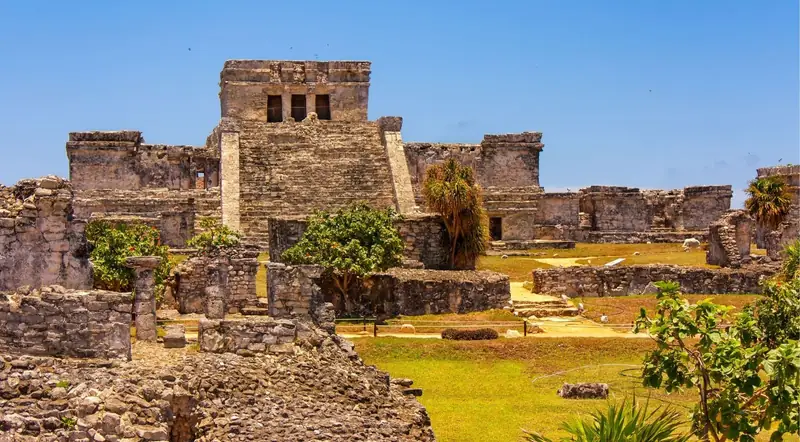
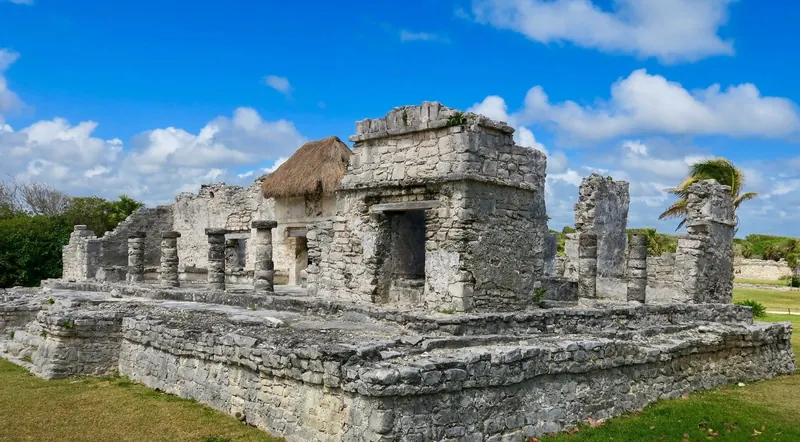
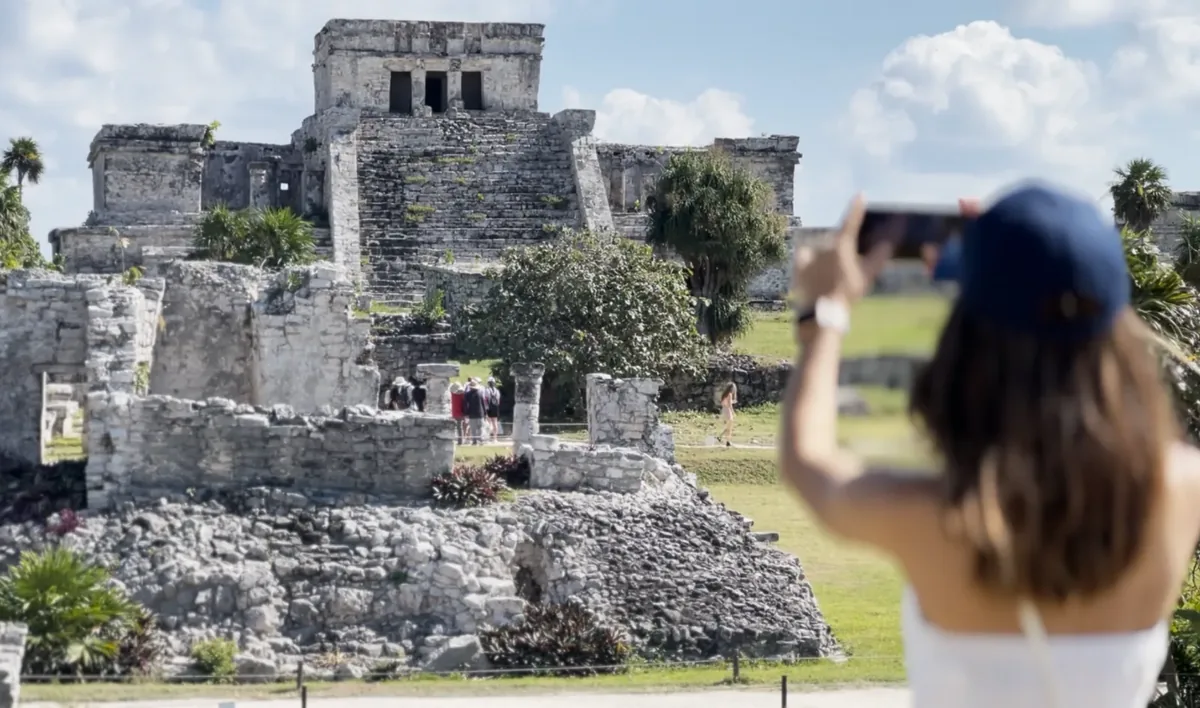
The signature building is El Castillo, a stepped watchtower-temple set at the highest point of the cliff, which likely doubled as a lighthouse — some researchers believe fires lit in its windows helped guide canoes through a narrow break in the offshore reef. Nearby, the Temple of the Frescoes holds some of the best-preserved Maya mural painting on the Yucatán Peninsula, depicting deities associated with fertility and the underworld. The Temple of the Wind God, perched alone on its own outcrop above the surf, is one of the most photographed structures in Mexico for good reason — you’ll walk right past it, and our photography guide covers where to stand, when the light is best and what the camera and drone rules are. Our structure-by-structure walkthrough covers what each building was actually for, including the unresolved question of who the Descending God carving represents.
Why a Guided Tour Changes the Experience
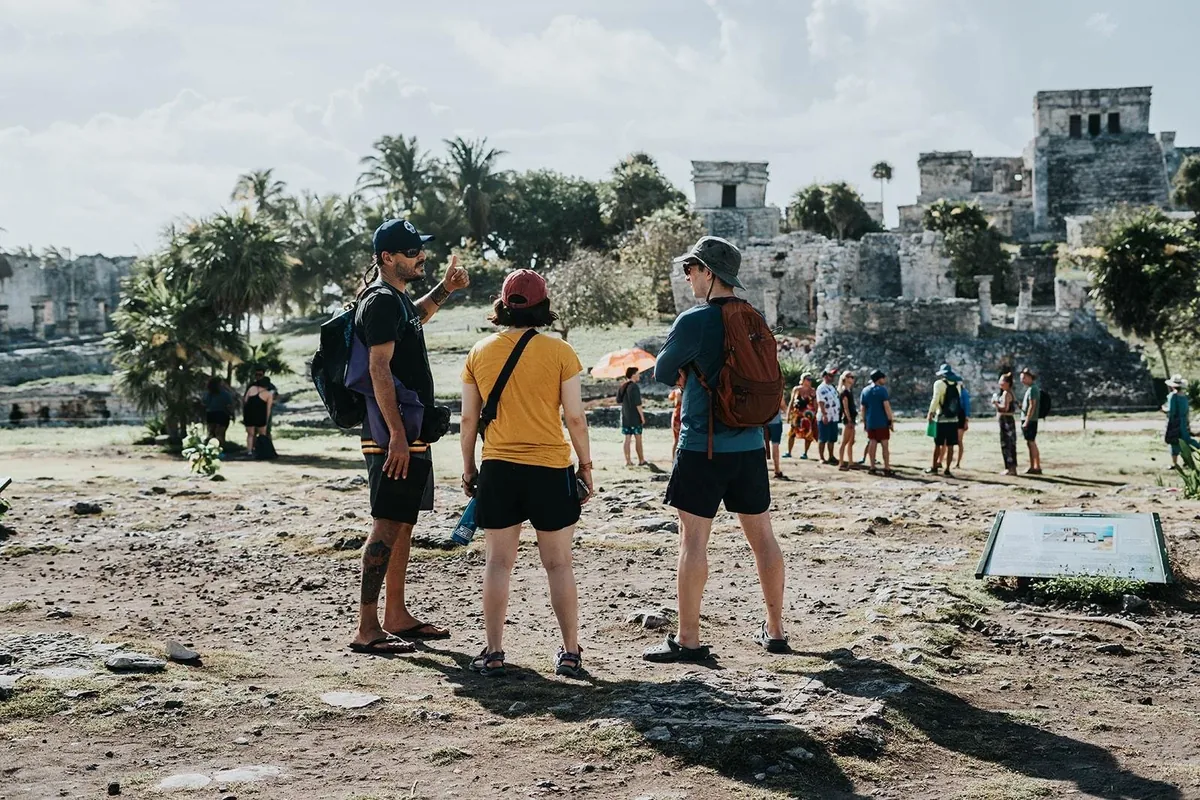
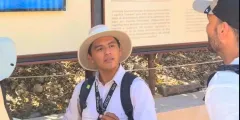
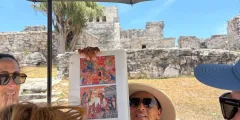
Tulum’s ruins are compact enough to see unguided in under an hour, but the site rewards context that a placard simply can’t provide. A certified guide — often, as with our featured tour’s guide Joel, someone of Maya descent — explains what the carvings and murals meant to the people who made them, not just their age. Guests on the top-rated walking tour on this page consistently single out exactly this: the difference between looking at old stones and understanding why they’re arranged the way they are. Before you book it, our guide to the walking tour covers the two ticket options, the best start time and what recent guests say about the language of the commentary. Whether that guide comes with a coach, a small van, a private vehicle, or is hired at the gate is a separate decision — our guide to private, small-group and self-guided formats works through which one fits your trip.
There’s also a practical reason to go guided. Following a July 2026 fee overhaul, entry to the archaeological zone now costs foreign visitors roughly 265 Mexican pesos (about $15 USD) in total, paid across Parque del Jaguar admission and a combined archaeological-zone-and-national-park fee. Buying these in cash, at the right windows, is still a common source of confusion and long lines in high season — see our full tickets and fees breakdown for the charge-by-charge details. A guided tour typically bundles this — you’re guided straight to the entrance instead of working out which ticket booth is which. The gate fee is only one line of the budget, though: our full cost breakdown consolidates every verified fee — entry, shuttle, transport, cenotes and tips — into one reference.
Planning Your Visit
The zone is open daily from 8:00 AM to 5:00 PM, with last admission at 3:30 PM. Early morning is the coolest time to visit a site with almost no shade. Tulum sits about 130 km (80 miles) south of Cancún — roughly a 1.5 to 2-hour drive — and about 37 miles north of Playa del Carmen, closer to an hour. If you’re staying in Tulum town itself, the ruins are a short taxi or bike ride away. See our complete Cancún transport guide for every option, including the ADO bus, Tren Maya and private transfers.
Most guided tours end at Park Jaguar beach, directly below the ruins, so it’s worth wearing a swimsuit under your clothes and bringing a towel. Comfortable closed-toe shoes are the better call for the uneven limestone pathways — you cover the whole site on foot regardless of how you arrive — even though sandals are common; there’s minimal shade across the site, so sun protection matters more here than at almost any other Maya ruin in the region. Because the whole coast sits on a fragile limestone aquifer, our responsible tourism guide explains which sunscreens to use and which to skip. If you’re bringing children, our family guide covers the best age to visit, strollers versus carriers, and how to handle the heat.
Whether you’re coming from Cancún, Playa del Carmen, Cozumel by ferry, or already staying in Tulum, the guided walking tour featured on this page is the most direct way to see the site without spending your first 45 minutes figuring out the ticket system. Check availability below, or browse the full range of Tulum ruins tours — including cenote combos, Akumal turtle-snorkelling days, Sian Ka’an lagoon and Muyil trips, bike tours, and private guides — further down the page. If you’re still comparing tour types and departure points, our complete Tulum ruins tours guide walks through all of them, our trip planning checklist puts every decision on a countdown, and if you’re wondering how safe Tulum is, our safety guide covers the advisories, the scams to watch for and the real risks.